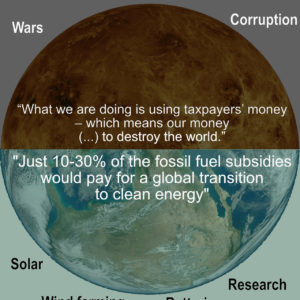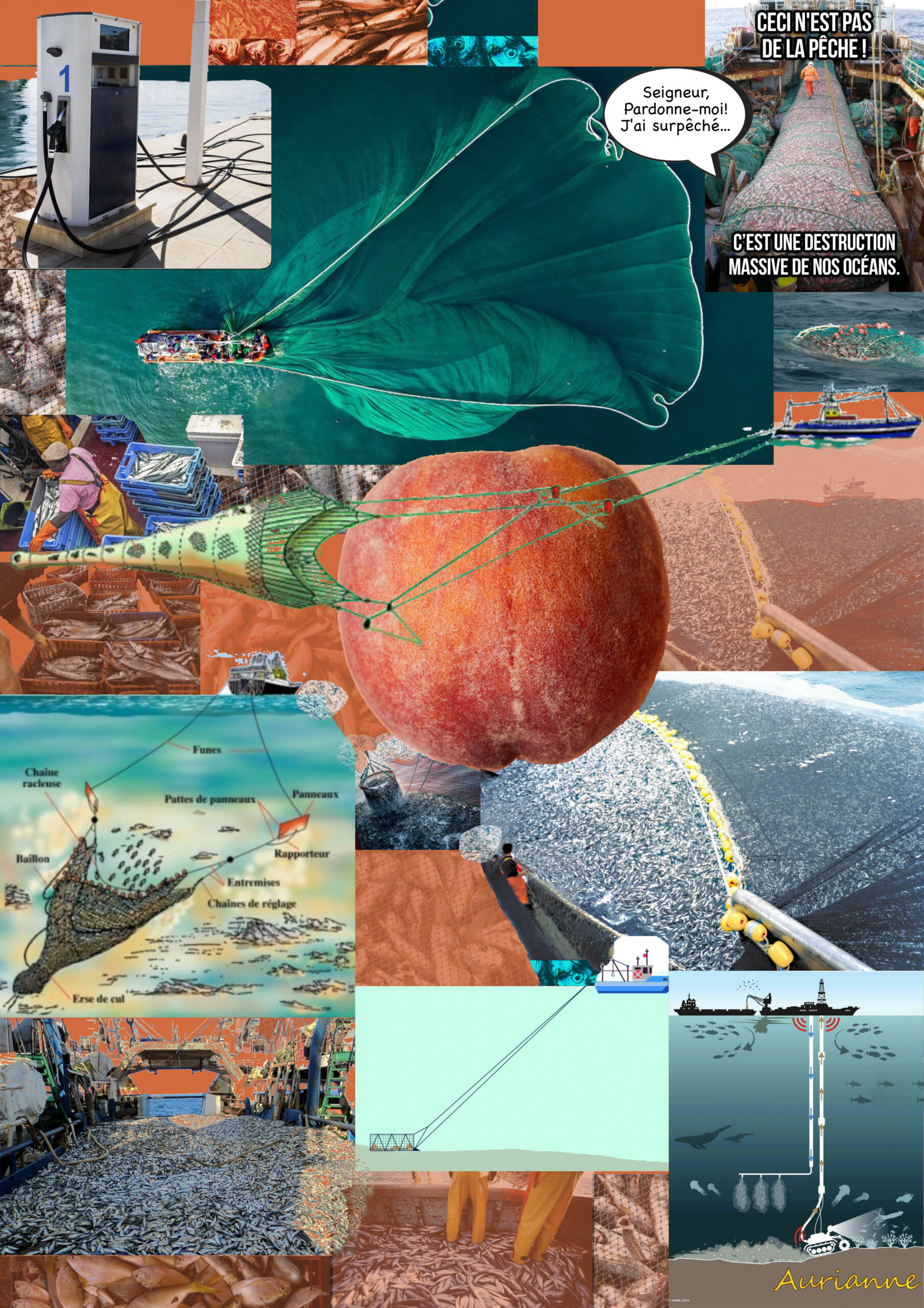
The fuel required for large, petrol-powered boats is subsidized. These subsidies are funded through taxes and ultimately enrich oil companies.
Banks only lend money to fishermen who use industrial fishing methods.
All industrial fishermen around the world catch the same fishes in the same locations, under the same conditions and are dependent on oil.
The abundance of energy (oil) and subsidy rules have led to widespread purchases of trawlers for pelagic net fishing. This method involves hauling in all marine life and keeping only those that generate profit. This fishing practice has become widespread and is used in unsuitable locations. Fish or marine animals caught that do not meet the desired criteria (sizes and species) are discarded dead into the sea or ocean. There is indeed overfishing.
Some boats engage in dredging in unsuitable environments, scouring up everything on the seabed or ocean floor. They leave nothing alive in their wake. These are acts of ecocides. They destroy resources. This approach is short-sighted because fishes and other living organisms cannot reproduce. Indeed, there are fewer and fewer fish. This directly threatens food security.
Today, a large portion of the fish caught is used to feed chickens and pigs.
Prior to the widespread availability of fuel subsidies, a greater diversity of fishing methods existed, each adapted to different environments, seabeds, and fish species. These methods were far more environmentally friendly.
It is imperative to ban industrial fishing and reinvest in more sustainable traditional fishing techniques, which ensure the reproduction of species, protect the environment, and avoid waste. Small-scale fishing cannot survive if industrial vessels harvest the entire catch. This would cost taxpayers far less. Furthermore, globalized industrial fishing drives costs down so much that fishermen are forced to perform dangerous tasks with minimal staff and little sleep. Fishing should be reduced, limited to feeding humans, and the practice of feeding livestock with fish flour should be put to an end.
Marin pêcheur : l’un des métiers les plus dangereux au monde – Thalassa – France télévisions: https://youtu.be/s–zp5dryY4?si=8eoBcp1AoBK1kTka
Industrial fishermen do not have a better standard of living than in the past. They are drowning in debt. They no longer have the freedom to choose their working methods due to the rules governing the allocation of subsidies. They are stigmatized as welfare recipients. It is one of the professions with the highest rates of suicide and drug consumption. They would benefit from returning to more sustainable fishing methods if such an option were available. Fishing should be scaled back by regulating retail prices in order to ensure a decent income for fishermen. Minimum prices are needed to prevent unfair competition. The rules must be the same for everyone.
Fishing methods explained – Marine conservation society: https://www.mcsuk.org/ocean-emergency/sustainable-seafood/from-sea-to-plate/fishing-methods-explained/
Certain methods of mineral extraction also destroy the seabed. They rake up everything in their path.
Le WWF tire la sonnette d’alarme: l’industrie veut exploiter des mines sous la mer – WWF: https://www.wwf.ch/fr/medias/le-wwf-tire-la-sonnette-dalarme-lindustrie-veut-exploiter-des-mines-sous-la-mer
Petition: Create global ocean sanctuaries – Greenpeace: https://action.greenpeace.org.nz/petition/oceans-create-new-global-ocean-sanctuaries?utm_source=web&utm_medium=campaign-oceans&utm_campaign=Oceans
Engageons-nous en faveur des aires marines protégées – Greenpeace: https://www.greenpeace.ch/fr/agir/protegeons-notre-planete-bleue/
Pauvres Pêcheurs – La Chanson du Dimanche S02E08: https://youtu.be/DkoldNQ4OkI?si=MK4XEb8qayZmdyHg
Translated with DeepL and Ollama translateGemma.