Before the 1980s, banks couldn’t use people’s deposits as collateral for investments. Banks were not allowed to use their customers’ deposits to invest them.
Up until the early 1980s, when you owned a share in a company, a building or a field and wanted to buy or sell other shares, the state levied transfer duties. It costed money to exchange shares. As a result, money was invested over a number of years, and investors had to pay close attention to what they were buying. They had to ensure that their investment would be viable over the long term.
This risk-taking was used to justify capitalism. Co-owners and investors took risks with their money, and as a result, they made the decisions. Risk was rewarded. Strict rules were put in place: investors were very well informed about what they were buying, and the share was bought without intermediaries (for example, a share in a farm, a share in Ford, etc.).
The post-war “golden age” was a very prosperous period for most people in the West. It was a period of strong regulation and state intervention. The ultra-rich weren’t as rich as they are today, but they already had more than enough.
Ronald Reagan and Margaret Tatcher introduced a massive financialization of the economy: lower taxes and less regulation (deregulation).
This had three effects.
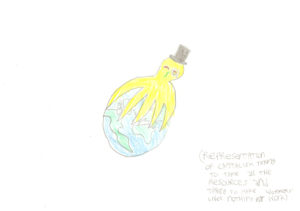
– Firstly, anything can be converted into shares on the stock market, and any name can be assigned to it: these are securitization transactions. For example, the sporting performance of a soccer team, NFTs (a computer image with a paint design) or a loan. What’s more, products are not purchased directly: you can securitize products that are themselves securitized. The investor has no idea what he’s buying.
– Secondly, banks have the right to use their customers’ deposits to invest. They take risks with the money entrusted to them by their customers. After the 2008 financial crisis, banks must have a minimum deposit to guarantee their customers’ money up to a certain amount (around €70,000 per person).
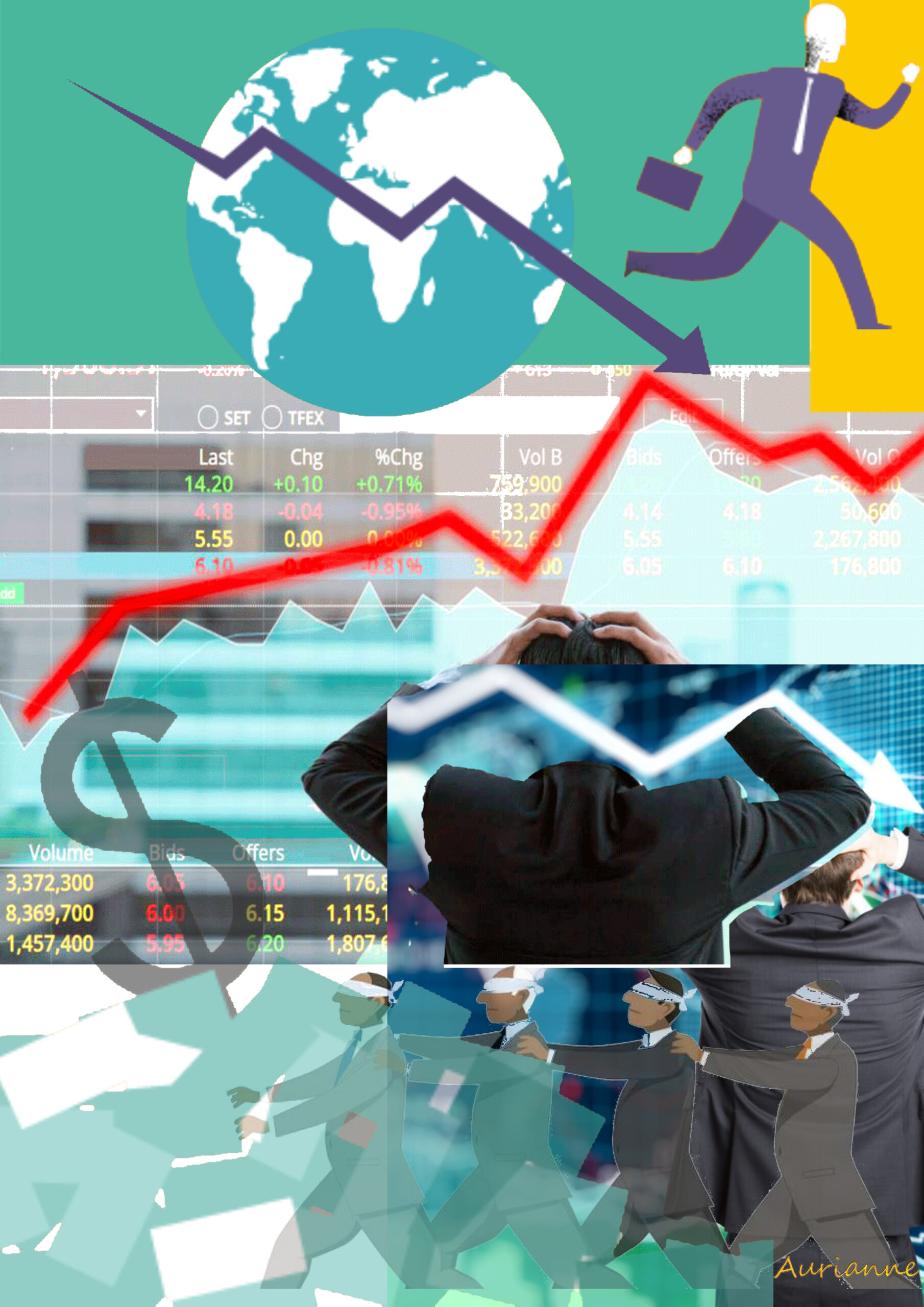
– Thirdly, transfer taxes have been abolished. Capital has become ultra-mobile. Investors could sell their shares instantly without having to pay. In the 2000s, high-frequency trading was introduced: robots are programmed to buy and sell shares according to predetermined criteria. They can carry out thousands of transactions per second. The investor no longer knows what he’s buying, and doesn’t need to take an interest in the business.
The subprime crisis of 2008 revealed just how dangerous this system was. Real estate loans granted to non-creditworthy individuals were securitized. This revelation led to a general loss of confidence.To avoid a complete collapse of the financial markets and the economy in general, governments used public money to buy junk bonds from the banks. Many of these junk bonds had been transferred to third parties, including governments. In Greece, for example, Goldman Sachs advised the government to place some of its money in junk banks. Goldman Sachs was paid by Greece for its advice, but it was paid much more by the banks seeking to dump this risk. This led to a bailout plan to prevent Greece from going bankrupt: the European Union and the International Monetary Fund made a loan to Greece with conditions attached.
So it was the taxpayers who paid.However, those in charge haven’t changed a thing, and things are still going on. Banks and capital are no longer responsible.
Adam Smith’s “invisible hand” theory proved to be wrong. Regulation is needed.
Repeated crises prove Karl Marx’s theory that unchecked capitalism is unstable and punctuated by crises that penalize the majority of the population. Companies can’t distinguish themselves from each other by their machines alone, because competitors also have machines they can push to their limits. Human labor can always be pressed to do more, and work longer. This is what makes capitalism profitable. There always comes a time when this workforce collapses because it works too much and isn’t paid enough. They become demotivated and ill.They no longer have enough resources to consume. Then they can revolt. That’s when crises happen. Workers who have been paid very little struggle, while the rich have been able to save and use their savings to live well even during crises. After the crisis, after the chaos created, order must be re-established. A tyrant is appointed by the people out of fear of chaos. The state intervenes to revive industry. It invests, for example by ordering weapons. Wages are raised and the cycle repeats.
The economic consequences of deregulation are terrible.
– There is an inequality between the taxation of labor and the taxation of capital. Labor is taxed at 50%, while capital is taxed at 20%. Owners contribute less to the national effort than workers, and deprive the State of the means to finance public services.
– Ultra-mobility forces investors to focus only on the very short term, even if this has dire consequences for the medium and long term. For example, laying off almost all the staff just long enough to sell the products. This bankrupts the company. Another example: stopping all sanitary controls in a food company in order to sell diseased horsemeat at the price of beef. This leads to health scandals, but investors’ capital is already gone when this happens. Many high-frequency trading robots are programmed to monitor social networks and news sites to sell at the first alert, for example, the revelation of a scandal by a whistle-blower. Some countries specialize in stock market manipulation, with social network accounts announcing false news to manipulate share prices using robots. The investor no longer takes any risk, and is no longer interested in the business. It’s the workers who take all the risks: they’ve trained, they’ve moved, they’ve sent their children to school, they’ve paid unemployment contributions, and so on. After the company closes, it can take a long time for them to earn an income again. It’s the company owners and employees who take the legal risks: they’re the ones who go to court for the mistakes that shareholders have pushed them to make. For example, they become complicit in poisoning or polluting rivers for fear of losing their jobs. For a few complicit people, it’s all the employees who lose their jobs when the company closes. Takata hid the defects in its airbags (which decapitate passengers), and by the time the scandal came to light, investors had long since put their money elsewhere. It was the employees who suffered the consequences. In real estate, it becomes much more profitable to leave homes empty but securitized. Indeed, if the housing were put on the market, this would increase the supply of housing and thus lower the monthly rent. By securitizing them, however, they sell for so much more, enhancing the value of homes that might otherwise yield high rents.
– Since banks can use their customers’ deposits, when a bank makes a mistake and loses money, the state feels obliged to compensate to prevent citizens from losing their savings. In this way, the banks are relieved of their responsibility. “Too big to fail” means that banks are taking more and more risks, and it’s the taxpayers who compensate for the banks’ losses with their tax money. They blame a scapegoat employee, such as Jérôme Kerviel at Société Générale, to justify continuing. At the political level, the rich can afford to support economically incompetent politicians because their capital is no longer at risk.
Regulations must be re-established. 1) Banks must not use their customers’ deposits. 2) Securitization transactions must be limited to a level so that investors know what they are buying, e.g. a share in a building. This would restore confidence and increase investment to help the economy. 3) Transfer taxes should be reintroduced, so that investors think long-term. 4) Cooperatives should be encouraged and helped when they run into difficulties with banks or the state granting them loans.
Translated with www.DeepL.com/Translator (free version)
Rogue trader (1999) – with Ewan McGregor et Anna Friel – Full Movie: https://youtu.be/SclDzvDWrds?si=-NJ-pmnxMn3ZEUgs
L’outsider (2016) – l’histoire de Jérôme Kerviel – Film complet: https://youtu.be/kFWcskKUyB8?si=F31RIqpcDJq-W7Or
Peut-on avoir le blé et l’argent du blé ? | Les idées larges – Arte: https://youtu.be/MHqEnYST-ms?si=AOYCoYweji7k3d5m
Épisode 40/36 : Titrisation : le risque en pièges détachés – France Culture: https://www.radiofrance.fr/franceculture/podcasts/entendez-vous-l-eco/titrisation-le-risque-en-pieges-detaches-4122182
Translated with Deepl