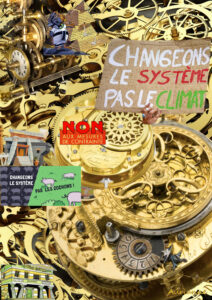
Achieving long-term social and environmental development goals requires a systemic approach.
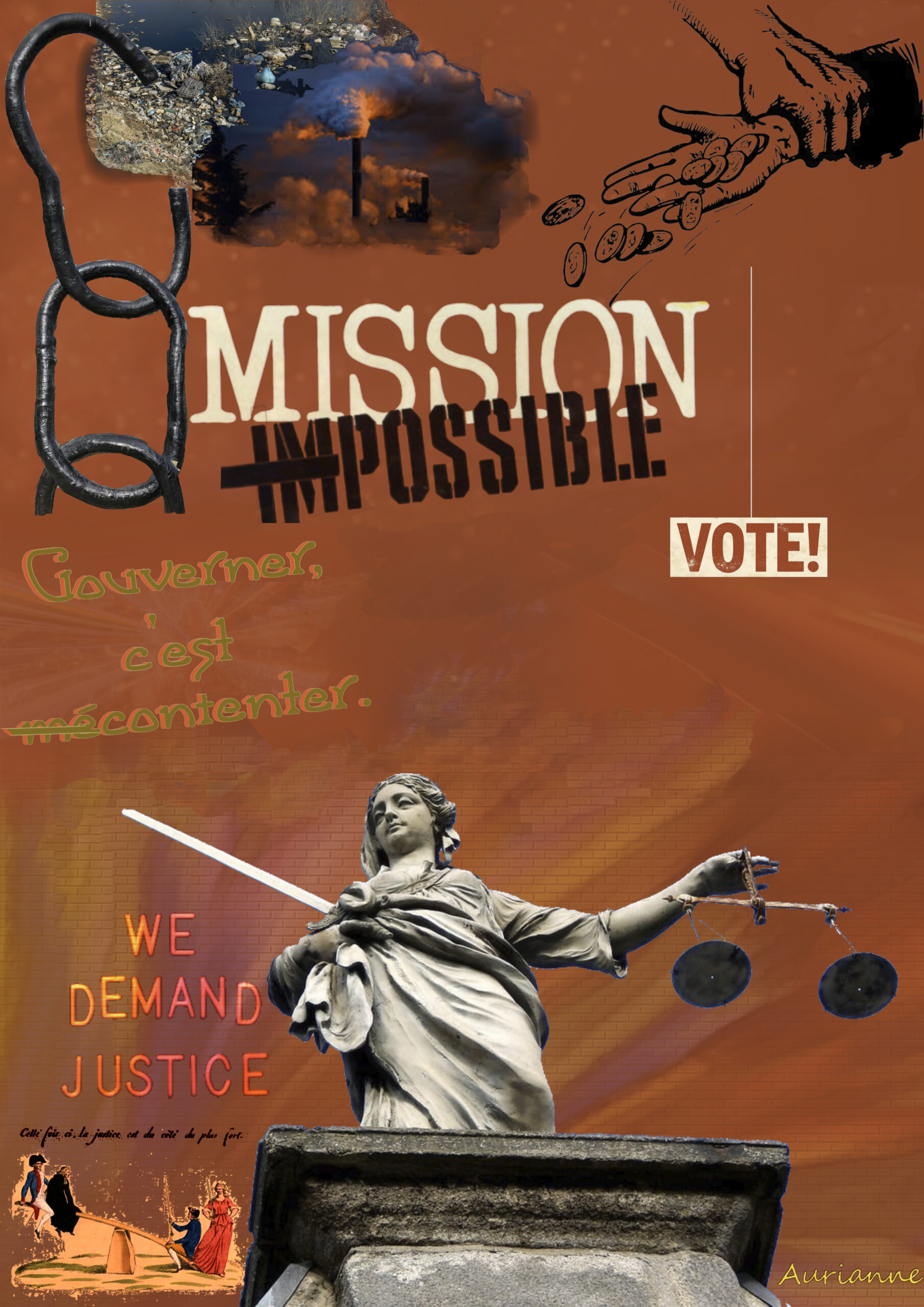
In every country, there are very different opinions on what should be done. We must live together. No group, whether on the right, left, or center, can impose its will on the rest of the population. Punishing part of the population is unnecessary. Governing by winning over others is an impossible task. Currently, nothing is happening because governments are seeking to win over others instead of seeking to bring people together.
“The man who moves a mountain begins by carrying away small stones.” Confucius
Another way of governing is possible. Suggesting changes that can achieve consensus is possible. Thanks to these changes, other changes will be possible in the future.
Here are some nonpartisan measures that are useful and can be implemented within a single term (4-5 years). These measures would profoundly change the lives of people in democracies.
Justice
1) Members of the constitutional council must be chosen at random from among magistrates for a term of two to four years. Verifying that a law is constitutional is a job for experts. They should not be people appointed by politicians, as is the case today. This is anti-democratic because the Constitutional Council can reject valid laws that have been democratically voted on. This favors politicians, and therefore corruption, to the detriment of the law. The advantage of having real lawyers is that it strengthens the rule of law.
2) Special courts must be abolished: labor courts, arbitration tribunals, the Court of Justice of the Republic, etc. Special courts operate with peers who are not lawyers and who acquit the powerful. For example, when an employee takes action against their employer, it is other employers who act as judges. When a society complains about the government, the judges are bosses from other similar societies who condemn the state. Certain laws are not enforced because of these special courts. For example, laws against illegal work or workplace safety are not enforced. Judges must judge all types of cases and all citizens. They can request expert opinions if necessary. Abolishing these courts would allow more citizens to assert their rights, and cheaters would no longer be exempt.
3) Prosecutors must be elected by citizens. Prosecutors must not be subordinate to the Minister of Justice, politicians, or those in power. Far too many cases are dismissed before they even reach the judge. For example, companies that have polluted soil or groundwater. For example, cases involving corrupt politicians. For example, crimes committed by businessmen or clergymen. The independence of the judiciary is a fundamental pillar of democracy. Prosecutors are experts in enforcing democratically enacted laws.
4) Before being passed, every law must undergo an impact assessment, meaning that experts must study all of its potential consequences and set criteria for success. For example, allowing for a 10% increase in train ridership. Every five years, each law must be evaluated. If the consequences are different from those anticipated or if the criteria for success have not been met, it must be debated again and voted on within six months. This is currently the case in Spain. This would prevent laws with unforeseen effects from being passed and would allow for more experimentation. The absence of the right to make mistakes paralyzes political action. Having to assess the consequences allows us to act systematically. For example, if we introduce a universal basic income, we need to control prices.
5) Laws should always be written in their final version and in a comprehensible manner. For example, a 50-year-old text may have been amended by 30 different laws, making it incomprehensible unless a lawyer puts in a lot of work. If laws were written in their final version, there would be less need for lawyers and therefore more people would have access to the law.
6) What is unacceptable here should be unacceptable there. For a citizen or a national company, committing an act abroad that would be illegal in their country of origin should be punished according to the laws of their country of origin and according to the laws of the country in which it is committed. This would limit unfair competition. It would prevent relocation to countries that do not respect the same social and environmental constraints. It would also reduce human trafficking, organ trafficking, and sex trafficking.
Economy
7) When a company receives public subsidies, tax exemptions, or benefits in kind, and if it is subsequently able to pay dividends to its shareholders, it must repay the government the same amount of public money it received. Subsidies to companies are the government’s largest expenditure. Most companies take advantage of this to maximize their profits and give the surplus money to shareholders. This is money from the people given to shareholders.
Transparence et évaluation des aides publiques aux entreprises : une attente démocratique, un gage d’efficacité économique – Rapport – Sénat: https://www.senat.fr/notice-rapport/2024/r24-808-1-notice.html
8) Teleworking and flexible working hours have many advantages and are easy to implement in the public or private sector. They do not require new laws. They make it possible to improve purchasing power without having to increase salaries. All that is needed is to set clear objectives.
9) Train and redeploy civil servants who have office jobs to field assignments. Many unnecessary administrative rules are set by ministerial decrees and can be cancelled without going through parliament. For example, assisting teachers in schools, providing administrative support to police and health personnel, assisting the elderly, helping in nurseries, etc.
Translated with DeepL