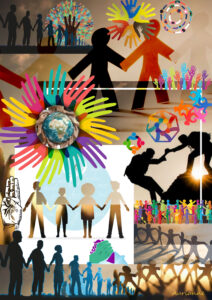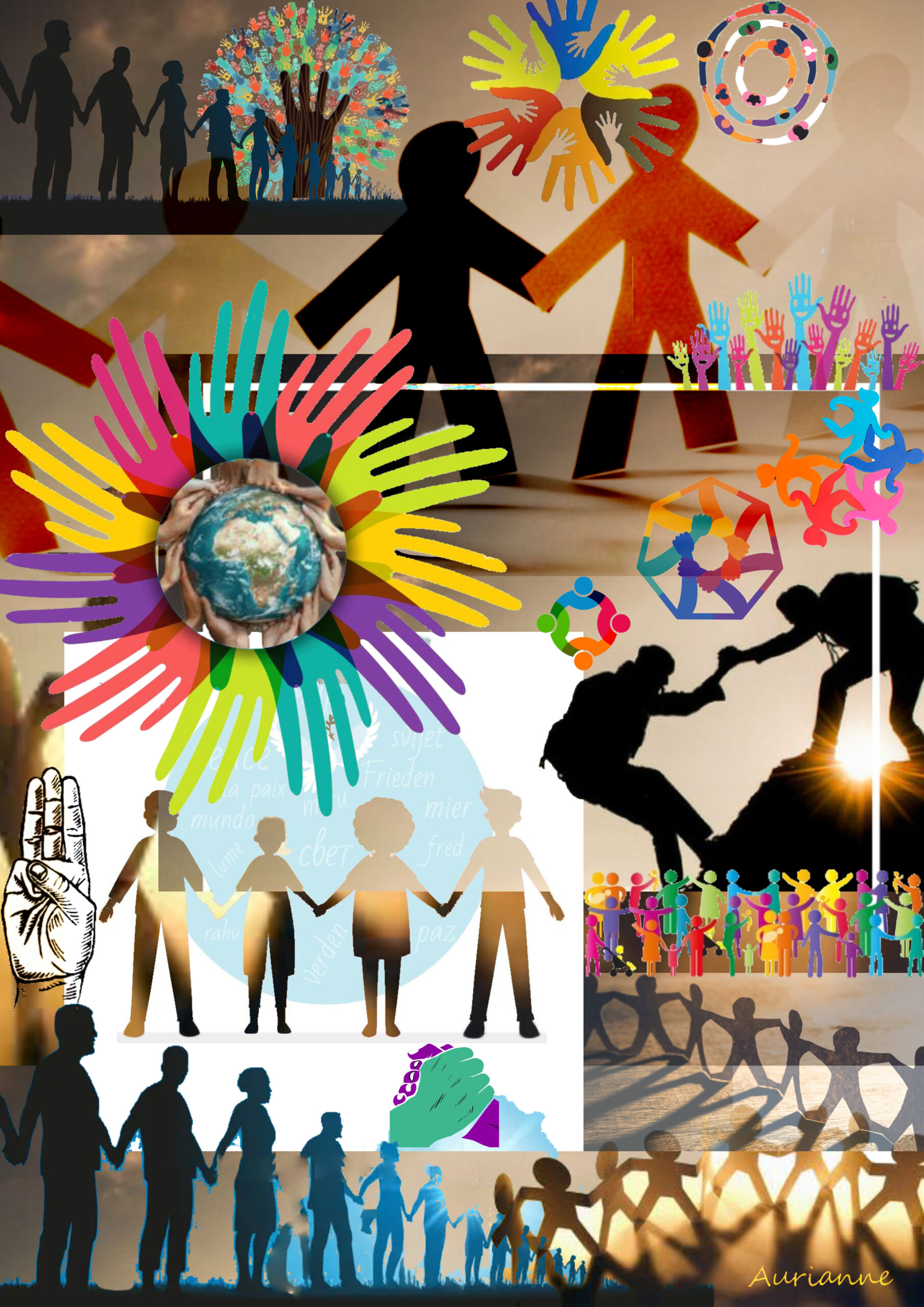
“One for all – all for one”
Self-interest at the expense of the general interest doesn’t pay off.
Societies in which each individual acts in his or her own interest rather than in the general interest live less well than those that choose the interests of the group. Paradoxically, those who think of their personal interests at the expense of the group are the ones who want to emigrate to more developed and wealthier countries that have chosen human rights and mutual aid.
The richest countries in the world are those where there is solidarity.
Humans are gregarious animals and have developed by cooperating. A single human being, as in the case of wild children, lives like an animal and has difficulty surviving. The first societies were formed to have walls (for protection) and grain (for food). Allegories of the nurturing homeland remind us that society has traditionally been built to protect and feed.
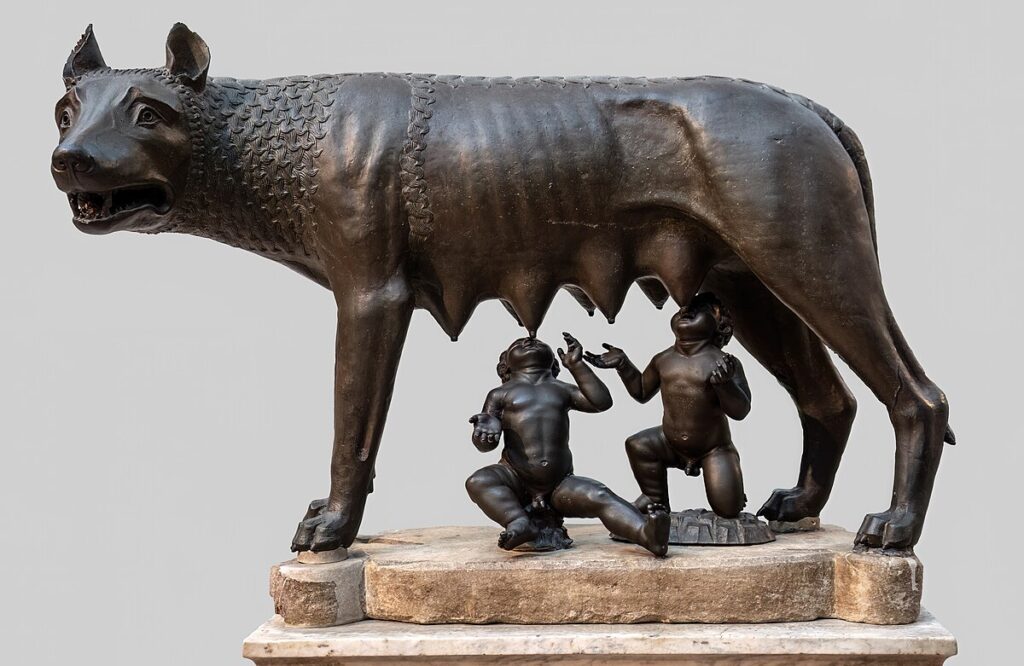
Romulus and Remus under the she-wolf
Solidarity is a tradition that has enabled humanity to raise its standard of living, with richer people and elites, but not in the disproportionate way we see today, where the rich earn much more, and in an extreme way, than the poor.
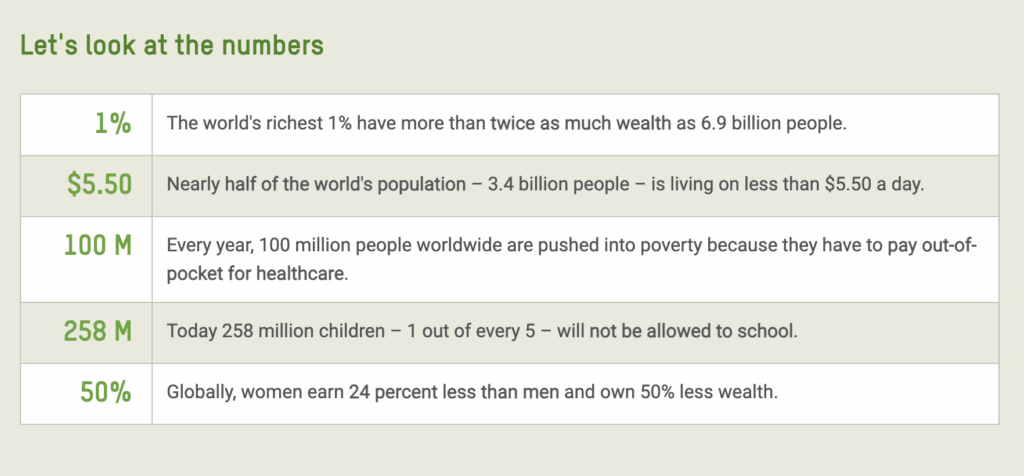
Exploiting others for your own gain makes you less wealthy than being part of a supportive society.
Thinking of others enables everyone to live better individually than when everyone thinks of himself. Solidarity enables everyone to live better. It’s in our individual interest to help others.
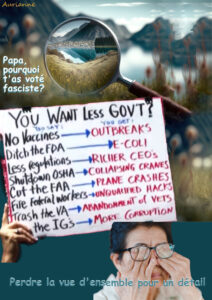
In the USA, the richest states are those that are Democratic, on the side of human rights. They even show solidarity with the Republican states, which receive numerous subsidies from states with Democratic governors. These states, especially in the South, could not maintain their standard of living without these subsidies. Yet it is these same states that promote the idea of every man for himself and the exploitation of others for their own benefit (in the past, slavery). The countries of the North have developed and enriched themselves because they have this mentality of mutual aid. In fact, by building infrastructures available to all (hospitals, justice, police, roads, drinking water, sanitation, schools, etc. ), by paying their workers properly and by using machines, they have increased their productivity and the well-being of all. Today, social democrats don’t want to mix with the poorest. They give them money to keep them out and exclude them from any hope of improving their condition. The Democrats are no longer putting their ideas into practice.
Liberal Hypocrisy is Fueling American Inequality. Here’s How. | NYT Opinion – The New York Times: https://www.youtube.com/watch?v=hNDgcjVGHIw
Europe, which actively promotes human rights, is one of the places where migrants want to go. The European Union is based on mutual aid. The Scandinavian countries are exemplary in this respect. By helping the most disadvantaged states, it has won markets. The rules favor trade, so everyone can get rich.
Switzerland is a small country that relies on democracy and solidarity. It still manages to attract the wealthy. “The strength of a community is measured by the well-being of its weakest member”. Constitution fédérale de la Confédération suisse – https://www.ivs.admin.ch/images/bundesinventar_FR/101.pdf
Singapore is also a small country built on solidarity. It is a democracy. All schools are of the same standard, there are no slums, hospitals are of high quality, and all Singaporeans are housed by the state.
Human rights are and must be universal.
This is not neo-colonialism, as claimed by the ultra-rich, who profit by monopolizing wealth and resources due to the absence of the state in these countries. Wealth cannot be measured by averages. You have to look at the extremes. Solidarity can only occur in a very strong, very democratic state.
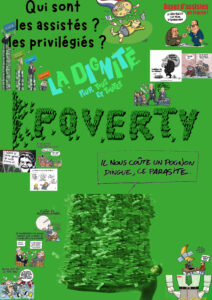
Underdeveloped countries, where every man for himself reigns, are getting bogged down. Inequalities are extreme. In a community, when people fall into extremes of poverty, it creates crime, begging, insalubrity and public health problems. It becomes toxic for the whole group. Very few people earn very much. Everyone dreams of being that very few, but most never have access to it. What’s more, those who excel in their fields have no access to security, health, job protection, justice, education and so on.
Does Welfare Prevent Crime? the Criminal Justice Outcomes of Youth Removed from Ssi – Oxford Academic – The quaterly Journal of economics: https://academic.oup.com/qje/article-abstract/137/4/2263/6581195
The stark relationship between income inequality and crime – The Economist: https://www.economist.com/graphic-detail/2018/06/07/the-stark-relationship-between-income-inequality-and-crime
To fight extreme poverty, we need to fight extreme wealth, so that countries have enough taxes to pay for this solidarity. Those who exploit natural resources must contribute to the general effort. We need international justice so that the ultra-rich cannot escape the law of the land. As soon as someone has money, they disassociate themselves from their country and go to live in countries where the population has chosen solidarity. They need to participate in this solidarity through technical rather than financial development aid: they need to develop a state and public services (police, justice, schools, tax departments, etc.). Simply pouring money or goods into underdeveloped countries only fuels corruption. For example, donated goods are resold on the black market. We need international solidarity and stronger states.
Extreme Inequality and Essential Services – Oxfam International: https://www.oxfam.org/en/what-we-do/issues/extreme-inequality-and-essential-services
Quelles sont les dix plus grandes fortunes de France ? – Observatoire des inégalités: https://www.inegalites.fr/Quelles-sont-les-dix-plus-grandes-fortunes-de-France
2016-2022 : une envolée des revenus des ultra-riches– Observatoire des inégalités: https://www.inegalites.fr/2016-2022-une-envolee-des-revenus-des-ultra-riches
World’s richest 26 people hold same wealth as poorest 50% – Irish Times: https://www.irishtimes.com/news/world/world-s-richest-26-people-hold-same-wealth-as-poorest-50-1.3765091
“Today, the top 10% of the global population’s income-earners earn more than the remaining 90%, while the poorest half of the global population captures less than 10% of the total global income”
“The wealthiest 0.001% alone, fewer than 60,000 multi-millionaires, control today three times more wealth than half of humanity combined.”
Highlights from the World Inequality Report 2026 (WIR 2026) – World inequality report: https://wir2026.wid.world/insight/executive-summary/
Just 0.001% hold three times the wealth of poorest half of humanity, report finds – The Guardian: https://www.theguardian.com/inequality/2025/dec/10/just-0001-hold-three-times-the-wealth-of-poorest-half-of-humanity-report-finds
Les montants de patrimoine détenus par les ménages en 2024 – INSEE: https://www.insee.fr/fr/statistiques/8672665
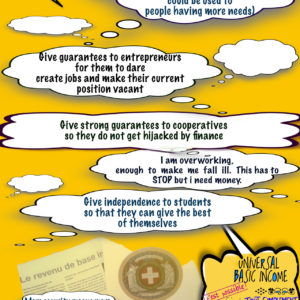
But solidarity isn’t about charity. Associations do good work, but they disengage the State, which does less. It takes the guilt off the rich, who give less than their fair share of taxes, and do so selectively. For example, they give food to good Christians. It is no longer society that is in solidarity, but individual people who help as they see fit. More and more meals are being served at Restos du coeur. The association doesn’t solve the problem. People need to be rehoused if they live in substandard housing. There must be a universal basic income. Solidarity is a set of rules to prevent people from living in extreme poverty. What’s more, development aid and the redistribution of wealth are in the interests of the countries that help.
In effect, donated products are purchased in the donor country and serve as a disguised subsidy to workers in the donor country. Donor countries thus have more markets for companies in their own countries. This prevents the resources of the country being helped from being captured by mafia groups. Leaving a country without aid means running the risk of it becoming a hotbed of infection for humans and animals. For example, Ebola fever. For example, swine fever, which is carried by birds over thousands of kilometers. For example, foot-and-mouth disease, carried by the secretions of migratory animals, which has led to the slaughter of many herds in Europe. In the Gaza Strip, for example, diseases such as polio and tuberculosis are developing. Development aid also helps limit immigration to developed countries. Indeed, if people have a good life in their own country, they have less reason to want to emigrate.
Why US Businesses Need The International Labour Organization – Forbes: https://www.forbes.com/sites/kristenkaufman/2025/09/03/why-us-businesses-need-the-international-labour-organization/
Gaza menacée par la polio, une maladie dangereuse partiellement éradiquée – Nations-Unies: https://unric.org/fr/gaza-menacee-par-la-polio-une-maladie-dangereuse-partiellement-eradiquee/
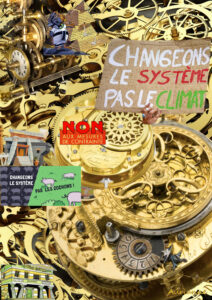
To meet the challenges of climate change, we need global solidarity and mutual support. For example, we need to help emerging countries to develop clean energy and transport.
What’s more, helping behavior has many beneficial consequences for psychological and physical well-being. Helping behavior has positive consequences, both in terms of creating positive emotions and strengthening social ties.
Les bienfaits des comportements de solidarité – Tissot: https://www.editions-tissot.fr/actualite/sante-securite/les-bienfaits-des-comportements-de-solidarite
M, Toumani & Sidiki Diabaté, Fatoumata Diawara – Solidarité (ft. Santigold, Hiba Tawaji… – M – Matthieu Chedid: https://youtu.be/ZEq7q8IMz9U?si=7MwyzQ0Atloaiwrl
“Il se faut entraider, c’est la loi de nature” (“People must help one another it is nature’s law.”) – L’âne et le chien – Jean de La Fontaine