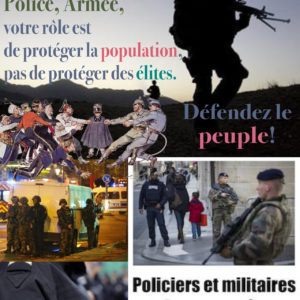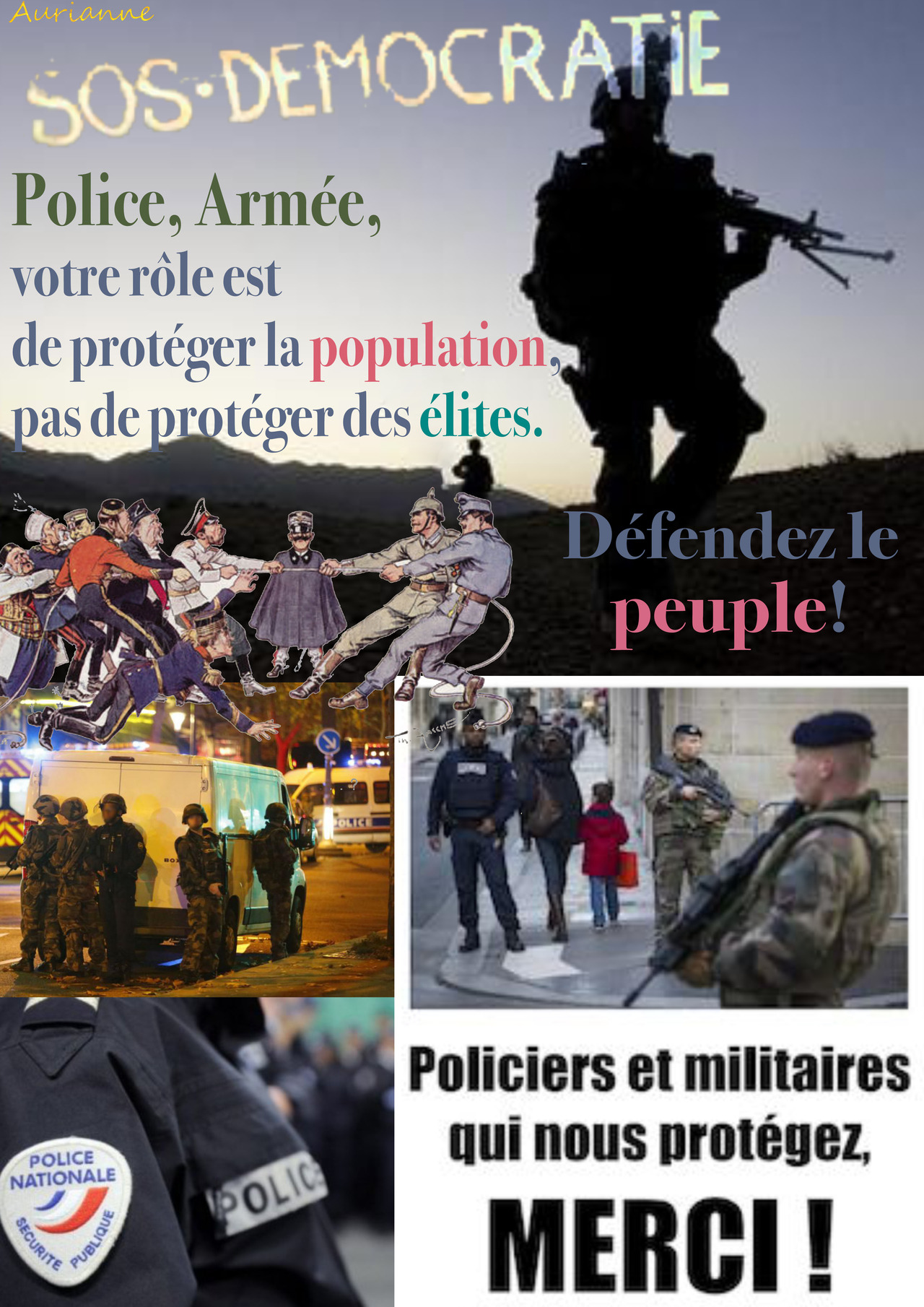
There is a difference between maintaining order and maintaining power.
The army should not intervene on its own soil. It must defend the country or prevent massacres.
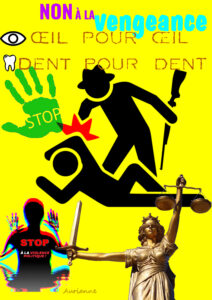
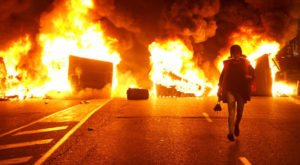
The police must defend property and people. They must not prevent people from expressing themselves or allow rioters to destroy everything. It is not the role of the police to defend those in power. The threat of police violence must not prevent freedom of expression; this is completely outside the role of the police. Violence by a few individuals among the demonstrators must not justify violence by the police and the army against the crowds. The crowds must be contained and violence must be absent from political life. There must be no violence on either side. Calls for violence must stop, and hateful comments must be avoided, regardless of the reason or political opinion. Violent individuals must be arrested, regardless of which side they are on. The police must protect everyone.
For example, in Nepal, the police fired live ammunition at peaceful protesters. This led to an escalation of violence. The protesters returned armed, which gave the army a pretext to intervene. The government failed in its duty to listen to the people, and the police failed in their duty to protect the people.
Népal : la jeunesse renverse le pouvoir après la censure des réseaux sociaux – Le Parisien: https://youtu.be/0m3QjfUwuPs?si=HgEsXLUms6a9W65l
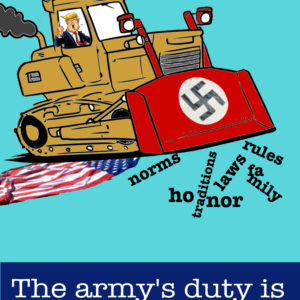
For example, Trump deployed the military twice, in Los Angeles and Washington, to prevent protests. The military took up position in these cities. People were protesting peacefully because ICE agents were putting immigrant children in prison, separated from their parents, which is against the law. The judges ruled that it was illegal to call in the army. Yet the military continues to obey an illegal order. That is not the role of the army. The army must defend the country.
In France, the gendarmes and the military promise “devotion to the public good and to comply with orders received only in strict respect for the human person, and undertake only to make legitimate use of force”. They do not take oaths from those in power.
Décret n° 2013-874 du 27 septembre 2013 relatif à la prestation de serment des militaires de la gendarmerie nationale: https://www.legifrance.gouv.fr/jorf/id/JORFTEXT000027996846#:~:text=Je%20promets%20de%20faire%20preuve,’exercice%20de%20mes%20fonctions.%20%C2%BB
The police and gendarmerie are “at the service of republican institutions and the population”: https://www.devenirpolicier.fr/sites/default/files/2021-02/code-deontologie-police-gendarmerie-2021.pdf
Code de déontologie de la Police nationale et de la Gendarmerie nationale: https://www.interieur.gouv.fr/deontologie
Read: The Full Statement From Jim Mattis, a US general who defends the constitution against the president, for people’s rights: https://www.npr.org/2020/06/04/869262728/read-the-full-statement-from-jim-mattis?utm_campaign=storyshare&utm_source=twitter.com&utm_medium=social
Gen. Mark Milley: ‘We Take an Oath to the Constitution, Not an Individual’: https://youtu.be/nMaI1Hg8dl8?feature=shared
Message d’Anonymous aux Force de l’Ordre: https://youtu.be/ru2kYRn1ugM
Video. Abandon, impuissance, déclassement : regardez en avant-première le documentaire “Police, à bout de souffle” – France tv info: https://www.francetvinfo.fr/societe/manifestation-des-policiers/video-abandon-impuissance-declassement-regardez-en-avant-premiere-le-documentaire-police-a-bout-de-souffle_3424853.html#xtor=CS2-765-[autres]-
Article 35 – Déclaration des droits de l’homme et du citoyen de 1793: https://www.conseil-constitutionnel.fr/les-constitutions-dans-l-histoire/constitution-du-24-juin-1793
“When the government violates the rights of the people, insurrection is, for the people and for each portion of the people, the most sacred of rights and the most indispensable of duties.” Article 35 of the constitution of June 24, 1793
As long as the army opposes the people, regime change is impossible. Without convincing the army’s senior officers, change is not possible. For the regime to change, all that is needed is for the army to decide to stand back and stop defending the existing regime. Politicians have no intrinsic power over a crowd if that crowd represents the population. There is no need for war.
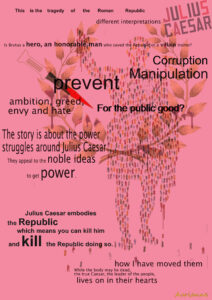
If the army stands back, the streets must not be left to a group representing a minority. A minority should not speak on behalf of the population. For example, in 1991, Boris Yeltsin was the only one expressing ideas.
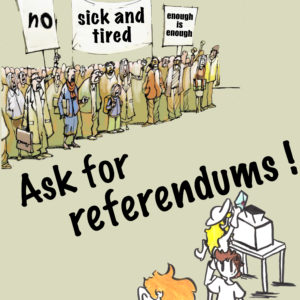
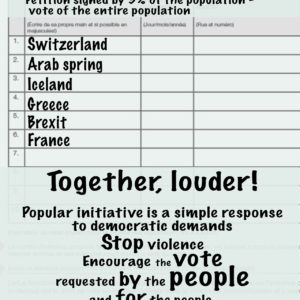
Citizens must get involved, demonstrate in the streets, express their ideas on banners, in complaint books, newspapers, and social media. The plurality of ideas must be expressed. Referendums must then be organized.
Revolutionaries must also be able to defend themselves against counter-revolutionaries coming from or being financed by foreign powers.
After the storming of the Bastille in 1789, thanks to freedom of the press, newspapers multiplied to express the opinions of the population. The army remained in the background and let the people do as they wished. There was no bloodshed. There was no founding father after the Revolution. Instead, there were debates. No one spoke for the people. Violence only appeared four years later when Europe declared war on France. People remember the guillotining of nobles, but many poor people died as a result of violence perpetrated against them during wars between nobles or famines. There was less violence than in the United States in 1776, where there were real clashes with the army.
The French Revolution and What Went Wrong – Stephen Clarke
Talleyrand always served France, his country, before its leaders. He was the founder of the Ministry of Foreign Affairs and Diplomacy. He served under the monarchy, the Convention, the Empire, and the Restoration. For example, he prevented France from being divided up among the victors of Waterloo at the Congress of Vienna.
Talleyrand always served France, his country, before its leaders. He was the founder of the Ministry of Foreign Affairs and Diplomacy. He served under the monarchy, the Convention, the Empire, and the Restoration. For example, he prevented France from being divided up among the victors of Waterloo at the Congress of Vienna.
La Fayette convinced Louis XVI to send the navy to support the American revolutionaries. This intervention was decisive for the independence of the United States from England. On July 15, 1789, General La Fayette took command of the National Guard and, two days later, invited his troops to display a tricolor cockade. He put the soldiers on the side of the revolutionaries.
La Fayette (1757 – 1834) – Le « Héros des Deux Mondes » – Herodote: https://www.herodote.net/La_Fayette_1757_1834_-synthese-194.php
La Fayette – Radio France – France Inter: https://www.radiofrance.fr/franceinter/podcasts/2000-ans-d-histoire/la-fayette-1309656
During the Paris Commune, the advances and retreats of the Republicans depended on the presence or absence of the army (war in Germany and Mexico) and whether certain officers rallied to the side of the Communards. In the end, it was the army, spreading terror, that attacked the people. It brought down a progressive government with the help and to the benefit of the Prussians and the conservative government of Adolphe Thiers. This was the Bloody Week.
La semaine sanglante. L’anniversaire d’un crime de masse oublié – l’Humanité: https://www.humanite.fr/culture-et-savoir/la-commune-de-paris/la-semaine-sanglante-lanniversaire-dun-crime-de-masse-oublie
The church played a prominent role. It served the state as a result of the Concordat of 1801, which allied the French state led by Napoleon Bonaparte with the church led by Pius VI. The church retained its privileges and monopoly on education, and in exchange it fanaticized the army. It recruited soldiers for Napoleon’s army and told them that God would forgive their misdeeds because these misdeeds served a greater cause.
The church is most often on the side of mass murderers and authoritarian regimes. The church is a means for the bourgeoisie to keep the people in slavery.
The people of Paris were not united. The bourgeoisie of Paris shot at the Communards from the windows of their buildings. They had made their fortunes on slavery. They considered the proletariat to be inferior to them. It was the exploitation of the latter that kept the economy going.
Their slogan, social order rather than democratic and social republic, means that there is a hierarchy: some have more rights than others.
The Communards did not turn French society upside down. The Paris Commune was reformist, not revolutionary. There were no confiscations of property, for example. There were elections for reforms, but the order of things remained the same. For example, the social hierarchy between the wealthy and the workers was maintained. Another example was that you had to be a man and a property owner to vote.
They were massacred for daring to demand that everyone have the same rights. The same thing had happened in 1848.
Les damnés de la commune – Arte: https://youtu.be/tvfo8J7aZHs?si=KWU5s9kVm_tjlTFD
During the October Revolution of 1917 in Russia, victory was only possible because the army decided not to intervene. Civilians did not confront the army.
In 1934, the French Catholic Church advocated disarmament in the name of peace. The royalist deputies completely disarmed France. The goal was to allow the Nazis to invade. Exchanges between royalist deputies and priests prove that the church wanted to be invaded. In 1936, the Popular Front voted for massive and rapid rearmament, but they did not have time to catch up with Germany and defend themselves properly.
La guerre qui vient ? Avant 14, avant 39 – France Culture: https://www.radiofrance.fr/franceculture/podcasts/concordance-des-temps/la-guerre-qui-vient-avant-14-avant-39-5369510
General De Gaulle, a military man, disobeyed orders because he put loyalty to his country before loyalty to his leaders. He was a true patriot.
Call of June 18, 1940, General De Gaulle: https://youtu.be/fo4yqbVPtxw
In 1958, De Gaulle allowed a change of regime because the army no longer wanted to defend the government. This was done without violence.
In Guatemala, Iran, and the Democratic Republic of Congo in the 1950s, and in Chile in the early 1970s, even though democratic revolutionaries succeeded in changing their countries’ regimes without military intervention, it did not last. Counter-revolutionaries who came from or were armed from outside the country suppressed them.
We must convince officers to defend citizens, as La Fayette did against foreign European armies during the Battle of Valmy. This led to the founding of the first Republic.
Allen Dulles was the founder of the CIA, which organized counter-revolutions to crush the revolutions in these countries.
Allen Dulles, le croisé de l’anticommunisme – France Inter: https://www.radiofrance.fr/franceinter/podcasts/espions-une-histoire-vraie/allen-dulles-le-croise-de-l-anticommunisme-7097585
Afterwards, Che Guevara said that imperialism has no mercy, that the only way to survive is through military force.
It was thanks to Che Guevara that Cuba resisted the Bay of Pigs invasion led by American counterrevolutionaries, because Cuba had built up enough military strength to protect its revolution and the Cuban people had the army on their side.
In 2008, in Ukraine, on Maidan Square, protesters rose up and frightened the pro-Russian president enough to make him leave. The army did not intervene.
The army fired on peaceful protesters during the yellow vest movement. Some lost an eye or a foot. The yellow vests were simply asking for an improvement in their standard of living (life was too expensive, benefiting only the elite) and for more democratic power (referendums initiated by the people). Their demands were not met because the police and the army were against them.
Gilets jaunes- Message d’un militaire à ses frères d’armes: https://youtu.be/bpQCr5dJ2xk
Manif des policiers: “Je suis gilet jaune” “on choisit le peuple”: https://youtu.be/ZOGojKoJzPA
Bolsonaro allies nearly launched military coup in 2022, police report says
Senior Brazil military figures backed plot to seize power after Bolsonaro’s election defeat, federal documents allege – The Guardian: https://www.theguardian.com/world/2024/nov/26/brazil-almost-suffered-far-right-military-coup-police-report-claims
In 2025, the Syrian army stopped supporting Bashar al-Assad, and within a week, he fled the country. There is now a president and a provisional government. They rely on assistance from the United Nations. The people were able to change the regime. Unfortunately, there was violence.
Do you want to be an army of terror serving an elite that oppresses the people, or an army of the people that liberates citizens educated to be free thinkers?
Désobéissance militaire – France culture: https://www.radiofrance.fr/franceculture/podcasts/concordance-des-temps/desobeissance-militaire-1779181
Translated with DeepL