In France, Anne Hildalgo and Eva Joly were candidates with ambitious progressive, social, and ecological programs who had proven themselves in the past. One had managed the city of Paris as mayor, and the other had brought oil company executives and corrupt politicians to prison through her work as an investigating judge.
The polls gave them around 5% of the vote, and many people voted for Jean-Luc Mélenchon or François Hollande instead of these candidates in order to make a In France, Anne Hildalgo and Eva Joly were candidates with ambitious progressive, social, and ecological programs who had proven themselves in the past. One had managed the city of Paris as mayor, and the other had brought oil company executives and corrupt politicians to prison through her work as an investigating judge.
The polls gave them around 5% of the vote, and many people voted for Jean-Luc Mélenchon or François Hollande instead of these candidates in order to make a “useful vote”. The polls, starting with the primaries in their parties, caused these two candidates to lose many votes. It was out of fear that the right would win that Jean-Luc Mélenchon and François Hollande won the votes of many citizens, not because of any support for them personally. These candidates, who are favored in the polls, are campaigning by saying that if people don’t vote for them, the right will win. Jean-Luc Mélenchon and François Hollande are poor candidates because they put their own interests before those of the French people and are not willing to do much to improve the quality of life of the French, reduce inequality, or combat climate change. Their only merit is that they are less bad than the right. Citizens have been very disappointed by François Hollande, who has done very little, and by Jean-Luc Mélenchon, who is playing into Vladimir Putin’s hands and is violent within his own party.
In the United States, the Green Party frequently withdraws to prevent Republicans from winning. In Canada and the United Kingdom, it is the Liberals who withdraw.
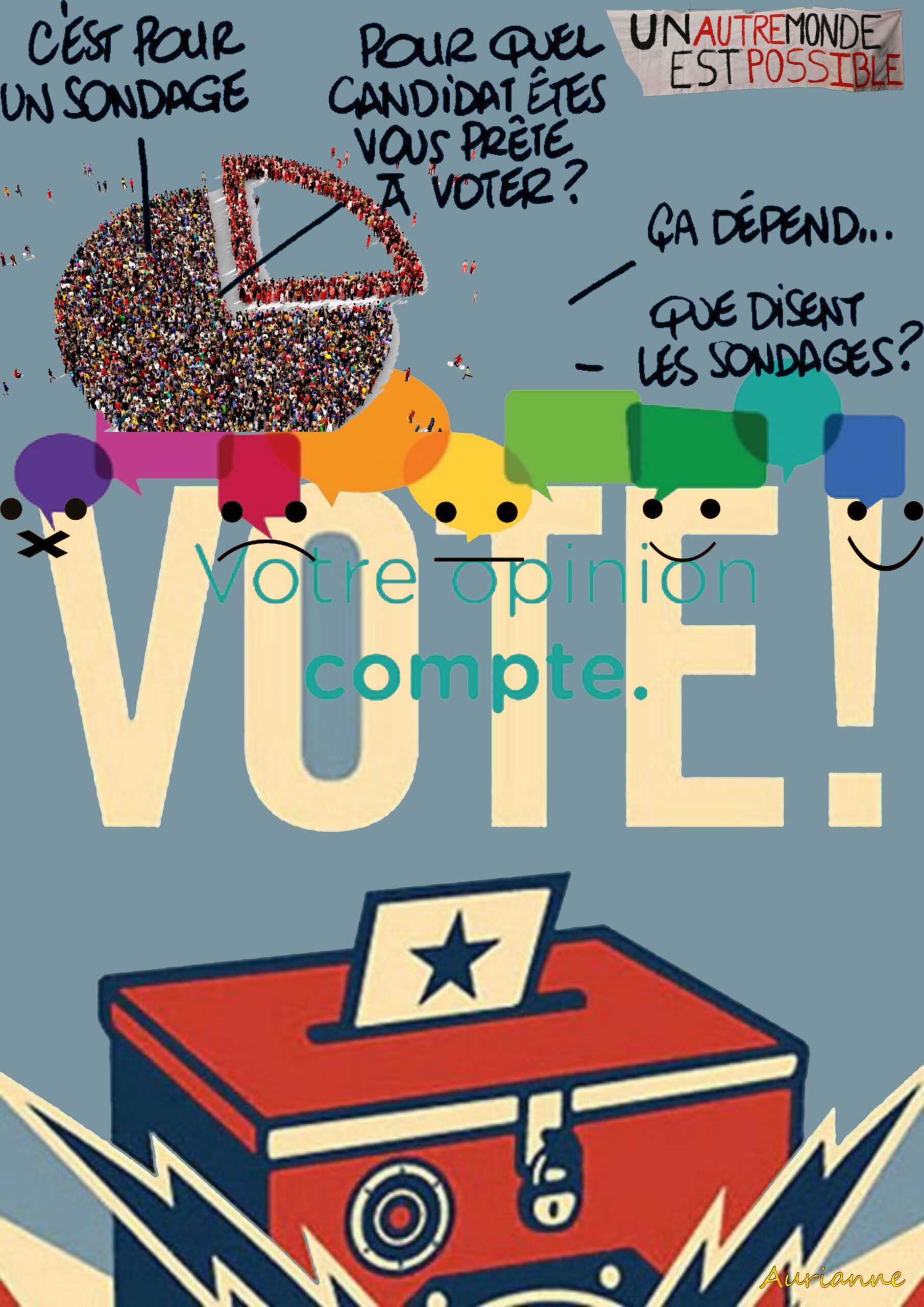
Polls play a disproportionate role in elections, even though they are not very accurate. They survey samples that are not very representative and are too small. They make self-fulfilling prophecies: by claiming that a particular candidate will get more votes, they influence citizens to vote for that candidate in order to group the votes and try to win the election.
Political commentators and the media use polls as if they were oracles and accuse citizens of being sheep who follow the polls. Polls are harmful.
There is a real risk that the right will win. In 2002 in France, the French ignored the polls and chose the candidates they preferred. Jacques Chirac, from the right, and Jean-Marie Le Pen, from the far right, were elected in the second round, even though the majority of citizens had voted for the left in the first round. The electoral system favors having only one leader and limiting the number of parties that run.
President Volodymyr Zelensky in Ukraine did not have a specific program but campaigned on the fact that he was not an oligarch, that he would put the interests of Ukrainians first, that he would turn to Europe, and that he was not corrupt. He won the election and is now a hero standing up to a dictator, Vladimir Putin. This is very rare.
Zelensky (1/2) | Comment Volodia est devenu le président Zelensky – Arte: https://youtu.be/DVkPWSGhlLc?si=W8sUm0kKXEj4_UF7
Zelensky (2/2) | Comment Volodia est devenu le président Zelensky – Arte: https://youtu.be/fMQkWPsjTaQ?si=J7EpvdNhZdGi9kpm
In Moldova, Maia Sandu won the elections in the same way. She transformed the country by fighting corruption, establishing the rule of law, and turning toward Europe. This is very rare.
Jacinda Ardern in New Zealand has handled COVID well and managed to reduce the suicide rate in her country.
Sanna Marin in Finland has handled COVID well and actively supported Ukraine.
Voters must have the courage to vote for the candidate who is the most honest and best able to defend the interests of citizens, or else the electoral system and voting method must be changed. Should someone become disillusioned because an elected official hasn’t done enough, one shouldn’t, out of spite, turn to another candidate, backed by billionaires, who will act but against the general interest.
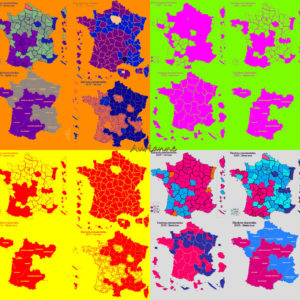
The outcome of elections varies greatly depending on the voting system. For example, in the approval voting system (where voters approve or disapprove of each candidate), the Rassemblement National and les Verts obtained the same score of 26% in 2012, whereas in the single-member plurality system (where voters choose a single candidate), they obtained 18% and 2% respectively.
Voter autrement – Gate Lyon Saint-Etienne : https://www.gate.cnrs.fr/vote
Vote par valeurs – Wikipedia: https://fr.wikipedia.org/wiki/Vote_par_valeurs
Having to choose only one candidate polarizes politics and favors candidates who are popular with the media. This also encourages populism.
La France est-elle le berceau du populisme ? – Radio France – France Culture: https://www.radiofrance.fr/franceculture/podcasts/questions-du-soir-l-idee/la-france-est-elle-le-berceau-du-populisme-5241044
There are electoral systems where voters can rank candidates in order of preference.
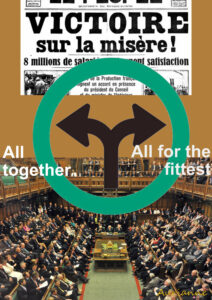
There are proportional voting systems with a single round. For example, if such a system existed in France, left-wing parties would win a large majority in parliament. Instead, they are led by right-wing parties because of the two-round voting system, where voters must choose between the two candidates who received the most votes in the first round. This means that voters have to vote strategically to get to the second round instead of voting for their preferred candidate.
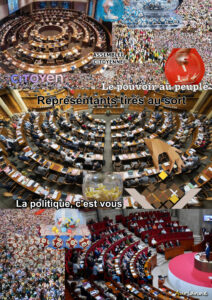
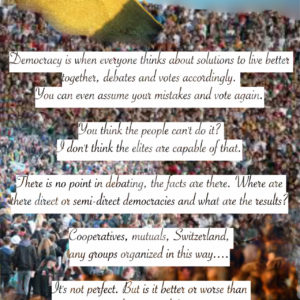
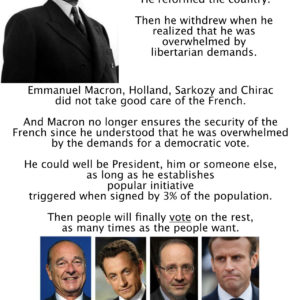
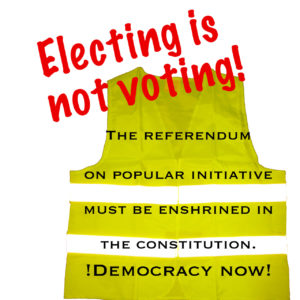
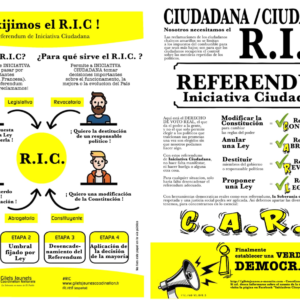
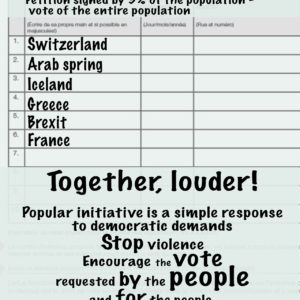
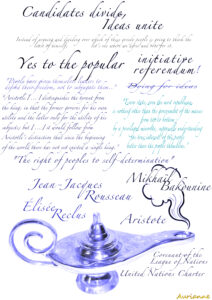
It is possible to vote for ideas rather than for people, for example by introducing referendums initiated by the people or citizens’ initiatives.