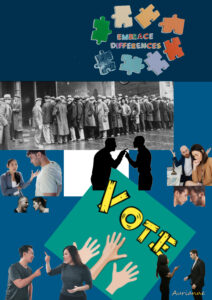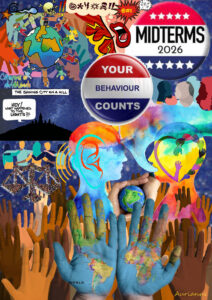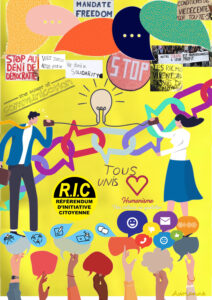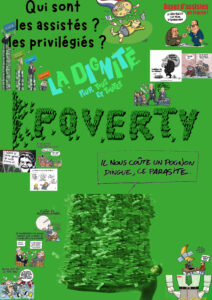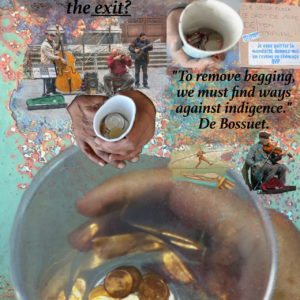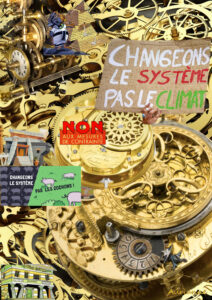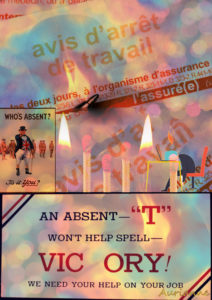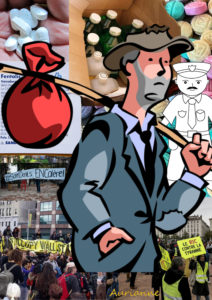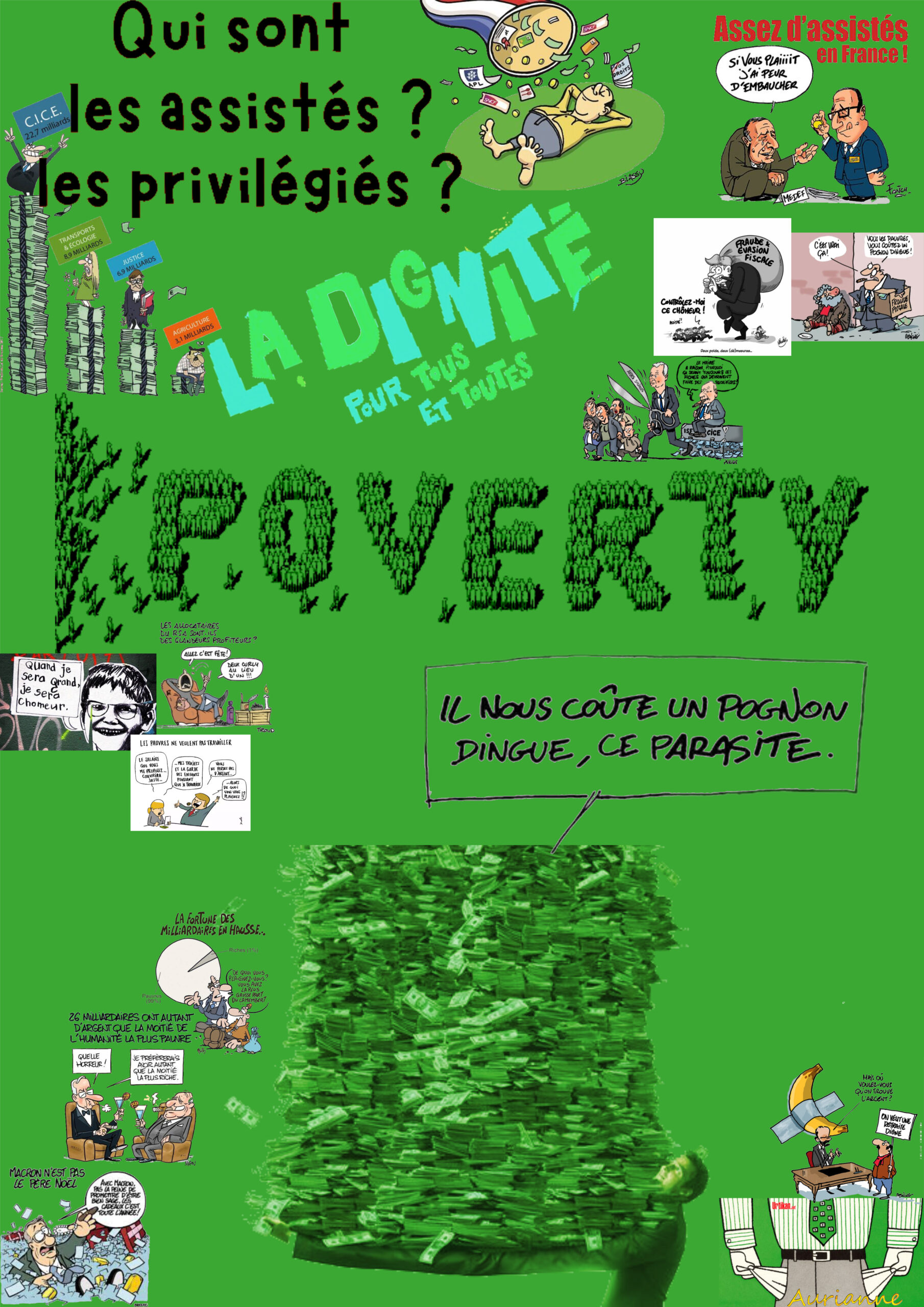
The French are supposedly welfare recipients who don’t work, who wait for everything to come from the state, who have privileges and receive public money or free services (such as school lunches) without giving anything in return or showing any gratitude. They would only work 35 hours a week, when they have a job.
Having a paid job does not automatically mean that you are useful to society.
What about what David Graeber calls “bullshit jobs,” which refers to “the vast majority of office workers, who are forced to devote their lives to tasks that are useless and of no real interest to society, but which nevertheless help to maintain employment“; ”a form of paid employment that is so completely useless, superfluous or harmful that even the employee cannot justify its existence, although he feels obliged, in order to honor the terms of his contract, to pretend that this is not the case.” (Bullshit jobs – Wikipedia: https://en.wikipedia.org/wiki/Bullshit_Jobs)?
What should we think of workers who pollute solely to enrich the ultra-rich?
What should we think of those who do their jobs without achieving public service objectives (for example, teachers in France who do not meet equal opportunity targets)?
What should we think of workers who do not produce quality work for the sole purpose of enriching their bosses (e.g., construction workers who build poorly soundproofed, poorly insulated homes made of concrete that cracks after 50 years)?
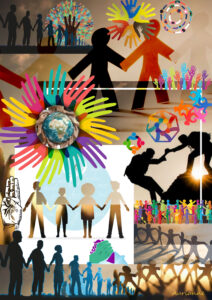
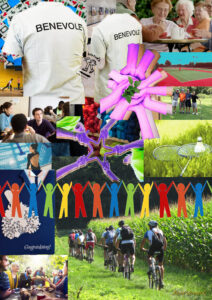
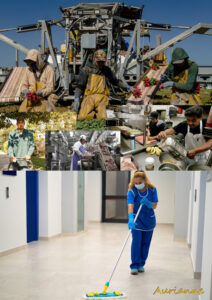
There are many volunteers and informal workers who are very useful to society. For example, firefighters, sea rescuers, teachers who teach French to immigrants, activists who defend human rights or the environment, housewives, and people who care for the disabled or elderly.
Furthermore, some jobs are harmful to society: embezzlement, pollution, overproduction, illnesses linked to poor lifestyles caused by work (sedentary lifestyles, poor diet, stress, etc.) that are paid for by society, etc. They cost other people money. There are even wars that are waged to support economic activity, even if that activity is harmful. For example, let’s take big oil companies.
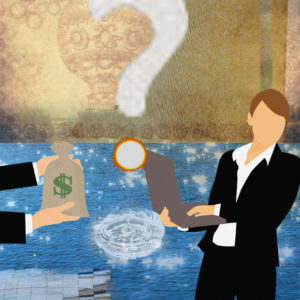
Not to mention those who have become rich through subsidized contracts and grants. The C.I.C.E. (Inter-Company Center) and social VAT are effectively public money given to companies with no guarantee of anything in return. Many big bosses claim to have made their fortune on their own, when in fact they have benefited greatly from public money. For example, Elon Musk benefits from public money: NASA money for Space X, subsidies for the purchase of electric cars, etc.
There are also many paid workers who are useful. For example, garbage collectors, peasants, artisans and nurses.
But we cannot make a link between remuneration and public utility.
On the other hand, there are fewer jobs in France. We cannot blame the unemployed for their lack of work when jobs have been relocated or eliminated.
Furthermore, because hiring is based on resumes rather than skills tests, discrimination and cronyism persist and prevent some people from getting jobs even though they have the skills _ even if they couldn’t pay for degrees.
Employment is more precarious. Most workers work longer than their official hours and are not paid enough to support their families, forcing them to take on additional work, such as renovating homes. They have expenses related to their work, such as childcare and car ownership. They are forced to live in cities where the cost of living is high and housing is poor because that is where jobs and public services are located. In rural areas, farmers are no longer paid enough despite extremely hard work and live on subsidies. There is not enough money to create jobs on farms, which are forced to resort to industrial agriculture and livestock farming. Because jobs are not well paid, the population depends on subsidies and therefore on the state. The state can thus make the population fear that it will no longer provide social assistance. This allows it to control the population. People will not bite the hand that feeds them. Subsidies and allowances make people dependent and cause them to lose their freedom. Decent prices and wages should be set so that the population is less dependent on state aid. This would give them more freedom and allow them to pursue their professions as they see fit. For example, farmers could engage in organic permaculture.
Having a little land to grow vegetables and keep animals would make citizens less dependent on money. Being able to exercise every day would reduce healthcare costs.
We need to stop valuing work solely in monetary terms. Everyone must contribute to society; that’s what it means to be a citizen. What is useful to society is not necessarily what is paid for.
There are certainly people who live on welfare without doing anything to improve their situation. But this is only a tiny fraction of the population. The myth of the wealthy welfare recipient is used to denigrate the rest of the population.
Living on welfare is not as pleasant as we are led to believe. It denies the difficulties faced by most people in these situations: housing in isolated areas or neighborhoods where no one else wants to live, poor-quality food, etc. Solidarity comes at a price: letting the freeloaders go so we can help the people without resources, who represent the vast majority of welfare recipients.
Most French people work hard to make ends meet for a standard of living that is lower than that enjoyed by previous generations.
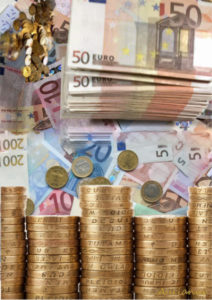
Focusing attention on these “privileged” who cost society a lot of money is a way of diverting attention away from those who are getting their fill at the expense of others: the ultra-rich for whom people work, who pollute, who have no regard for the common good. Isn’t receiving income from capital, property, or inheritance without doing anything yourself a form of privilege? The ultra-rich live off the backs of others without working. They live off the sweat of others. The poorest would not be entitled to the same privileges. If the rich paid their fair share of taxes or stopped receiving subsidies in disguised form, which amount to huge sums of money, there would be more than enough money for the population, whether they work for the common good or not.
Quelles sont les dix plus grandes fortunes de France ? – Observatoire des inégalités: https://www.inegalites.fr/Quelles-sont-les-dix-plus-grandes-fortunes-de-France
2016-2022 : une envolée des revenus des ultra-riches – Observatoire des inégalités: https://www.inegalites.fr/2016-2022-une-envolee-des-revenus-des-ultra-riches
World’s richest 26 people hold same wealth as poorest 50% – Irish Times: https://www.irishtimes.com/news/world/world-s-richest-26-people-hold-same-wealth-as-poorest-50-1.3765091
“Today, the top 10% of the global population’s income-earners earn more than the remaining 90%, while the poorest half of the global population captures less than 10% of the total global income”
“The wealthiest 0.001% alone, fewer than 60,000 multi-millionaires, control today three times more wealth than half of humanity combined.”
Highlights from the World Inequality Report 2026 (WIR 2026) – World inequality report: https://wir2026.wid.world/insight/executive-summary/
Just 0.001% hold three times the wealth of poorest half of humanity, report finds – The Guardian: https://www.theguardian.com/inequality/2025/dec/10/just-0001-hold-three-times-the-wealth-of-poorest-half-of-humanity-report-finds
The state’s biggest expense is subsidies. A subsidy passes through the individual but ends up in the pockets of the wealthy. This represents €227 billion for France. This is public money that would be better spent on social assistance and solidarity.
The government’s biggest expense is subsidies. A subsidy passes through the individual but ends up in the pockets of the wealthy. This represents €227 billion for France. This is public money that would be better spent on social assistance and solidarity.
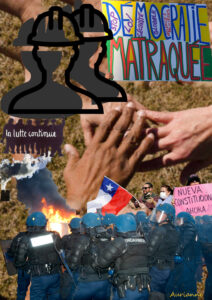
Those in power assist both the rich and the poor. The government collects all the tax money and redistributes it to its supporters. Elected officials can betray their voters. Elected officials exercise their influence with this public money. To consolidate their power, they assist both the rich and the poor so that they can control them. This influence trading can continue as long as people are pitted against each other: the rich against the poor, the young against the old, the French against foreigners, the unemployed against the employed, etc. This allows them to divert attention from their dealings, and no one seeks to change their power. They bargain: what will you give me if I give you this money?
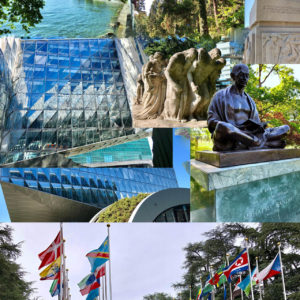
What role should the state play in our lives?
The Walter Lippman symposium created a model of a state that is very powerful because it captures wealth and redistributes it. Il is very undemocratic because it expresses itself through representatives, and very unprotective because it sets few limits. The state captures money without setting rules. Nazi Germany was the model at the time. Bertrand Russell was against it.
Bertrand Russell, Power: A New Social Analysis – 1938 – Wikipedia: https://en.wikipedia.org/wiki/Power:_A_New_Social_Analysis
Colloque Walter Lippmann – Wikipedia: https://en.wikipedia.org/wiki/Colloque_Walter_Lippmann
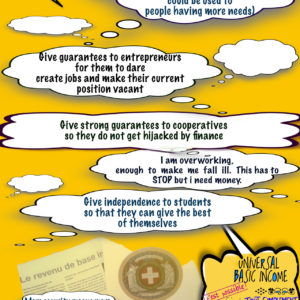
A universal basic income is possible and would allow everyone to contribute according to their means and skills for the common good. But universal income must be pooled, because if it is redistributed by the state, it will make all citizens dependent. Alternatively, A more direct form of democracy is needed.
Money is just a means of exchanging goods and services; it is merely a practical convenience. Money cannot be used to measure people’s worth. Many things that do not require payment are extremely valuable. Deciphering an old manuscript advances history, participating in public debate helps defend democracy, creating things advances civilization, having good relationships with others or resolving disputes keeps people mentally healthy, preserving a natural site preserves ecosystems, and so on.
Productivism, according to which we only have value if we work, is an ideology that is heading for disaster. With automation and better productivity, we don’t need as many people working. This mindset is harmful and hurts those who are seen as unworthy, like they’re holding society back. Some people may develop depression, with symptoms such as not washing and having difficulty being active. Some may even turn to drugs. The insult then becomes self-fulfilling and denies the suffering associated with this illness. And what about those who are disabled and cannot work?
It’s a social status symbol: idleness is a privilege of the rich. They attack welfare to supposedly save on taxes, when paying for welfare through taxes wouldn’t change their lifestyle one bit.
They attack the weakest members of society simply to feel stronger and superior. That’s why they have no problem spending fortunes on luxury goods that they hardly ever use and that do nothing to improve their lives except make them stand out socially.
Bertrand Russell, In Praise of Idleness and Other Essays, 1932: https://en.wikipedia.org/wiki/In_Praise_of_Idleness_and_Other_Essays
Everyone should mind their own business and enjoy life as they see fit, within the bounds of the law. Solidarity is essential so that everyone can live with dignity. And maybe everyone should try to do good around them!
Les solutions à la hausse des primes – Dietmar Grossenbacher – 52 minutes RTS: https://youtu.be/7rpodnlfG1M?si=iDlxcFBHK6F3NLd8