At the edges of cities, one can see the development of stores in corrugated metal (or metal cladding) warehouses — with ground-floor layouts and extensive parking lots in front, behind, or surrounding them.
These prefabricated structures offer significant cost savings and rapid construction. The investment per square meter is substantially lower than that of an architecturally designed building in the city center.
One of the key advantages of these retail spaces is their ample parking, crucial for customers who drive. This type of development is often easier to implement in the outskirts than in the city center, where parking restrictions are stricter. Parking areas in front, behind, or surrounding the building make access easier for customers, including those carrying bulky purchases or with limited mobility.
Furthermore, a ground floor building with a large glass storefront maximizes visibility, attracting the attention of passersby.
However, this layout also has its drawbacks.
A building made of corrugated metal, even a modern one, is very ugly. The outskirts of the city are hideous. The lack of natural elements (such as trees or green spaces) makes the environment very unpleasant.
Parking lots can become congested, especially during rush hours, which can be frustrating for customers. Asphalt or concrete parking lots can get very hot in the summer, making driving uncomfortable.
Warehouses, even well-insulated ones, can have thermal insulation issues, leading to higher energy costs for heating and air conditioning, and this pollutes. The construction of parking areas also has a negative impact on the environment.
Despite these drawbacks, the proximity of multiple retail outlets offers consumers a wider range of products and services. This makes it easy to compare prices and products from different brands and shops.
But this should not come at the expense of the environment.
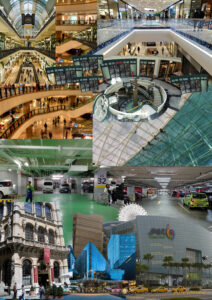
A shopping mall spanning about ten floors, with numerous parking spaces integrated into the building can combine these advantages and bring nature back to the outskirts of cities.
Shopping malls are designed to make shopping easier, offering wide aisles, clear signage, and often amenities such as restrooms, rest areas, and children’s play areas. In addition to stores, there also offer additional services such as movie theaters, restaurants, and even hourly childcare services, as well as package pickup areas. The shopping mall can also organize special events. One could also envision theaters or nightclubs. This way, people going out at night would not disturb anyone. These centers are typically monitored and secured, providing a safer environment for shoppers.
A shopping mall provides significant visibility to brands and stores, allowing them to attract a wider customer base and foster customer loyalty. A shopping mall offers spaces that can be easily adapted for different uses and events.
Rent and other costs associated with a space in a shopping mall are often more affordable than opening a store in a suburban location. Sharing common areas such as aisles, restrooms, parking lots, dedicated delivery zones, loading/unloading docks, etc., allows for economies of scale and thus reduces costs. This also reduces the costs associated with heating, electricity, air conditioning, and parking maintenance, making it more environmentally friendly.
The shopping mall handles certain administrative and marketing tasks, allowing retailers to focus on sales.
One can envision a shopping mall creating green spaces all around it to improve air quality and create a more pleasant environment.
One can envision a shopping mall prioritizing eco-friendly, recyclable building materials and ensuring good air circulation, thereby reducing the need for heating and air conditioning.
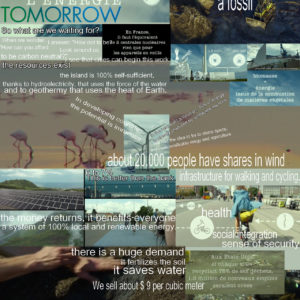
One can envision a shopping mall implementing systems for collecting and treating rainwater. One can envison a shopping mall with solar panels and a small wind turbine on the roof.
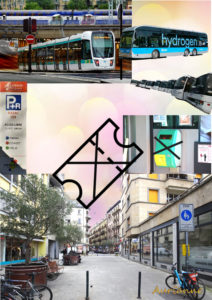
One can imagine a shopping mall well-served by public transport.
In conclusion, shopping malls represent a consumption model that can be improved to minimize its environmental impact and create more pleasant and sustainable spaces for consumers and residents. The key lies in intelligent design and adopting more environmentally friendly practices.
It’s a win-win situation!
Translated with DeepL and Ollama translateGemma.