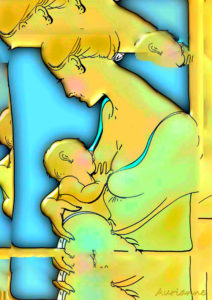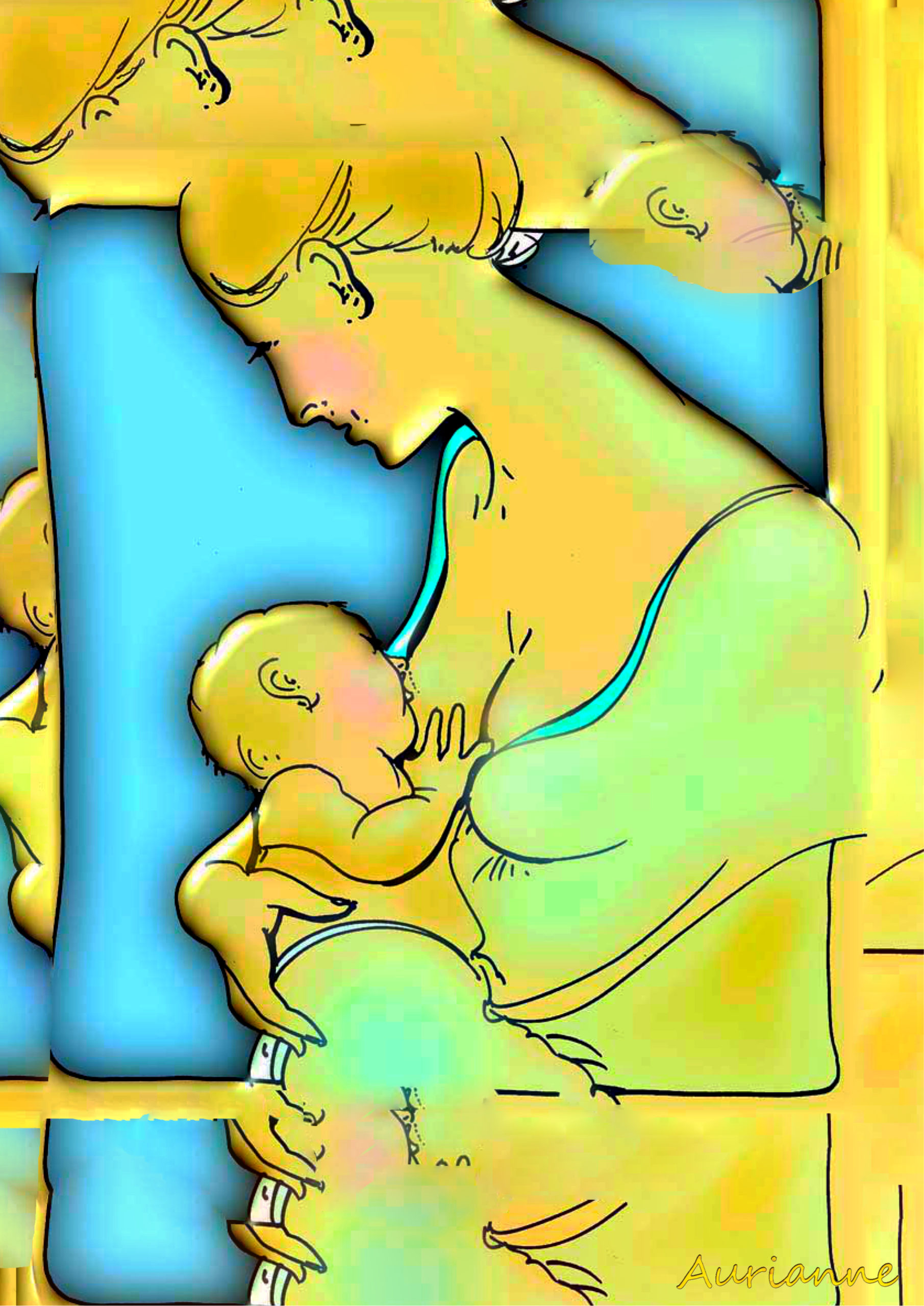
Skin to skin,
Mouth to breast,
You breathe life
with your nourishing milk.
A serene and straightforward head
makes you perpetuate
this gesture through the ages
and civilizations.
Listening to nature,
you reject artificial milks
devoid of hormones and
good bacteria
that populate a baby’s intestinal flora.
Factory-sterilized,
they make babies more fragile,
and promote allergies.
Maternal love,
the joy of being fed,
This precious bond
must be preserved.
You can sleep
with the baby
against your chest.
You can sleep soundly
when Daddy puts the baby to sleep
in the sling
that holds him close to his heart.
No health scandals
Nature has it all.
If you’re in pain,
If you have cracked nipples,
If baby bites,
If things aren’t going well,
Listen to the advice of your elders
Marie Thirion and Naître et grandir
can help you overcome any difficulties.
As much as the baby like for the first six months,
Only one feed in the morning
and one in the evening
will keep you breastfeeding
until baby’s second birthday.
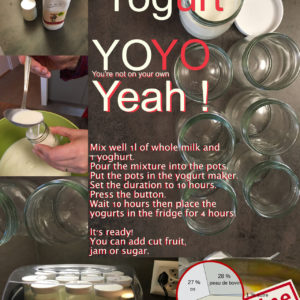
Yogurt, cheese and
Pumped milk
allow Mum
to take a break.
Aurianne Or
The health benefits of breastfeeding, for both mother and child, are widely recognized, including by the World Health Organization (WHO).
“Breastfeeding is one of the most effective ways to ensure child health and survival. However, contrary to WHO recommendations, fewer than half of infants under 6 months old are exclusively breastfed.
Breastmilk is the ideal food for infants. It is safe, clean and contains antibodies which help protect against many common childhood illnesses. Breastmilk provides all the energy and nutrients that the infant needs for the first months of life, and it continues to provide up to half or more of a child’s nutritional needs during the second half of the first year, and up to one third during the second year of life.
Breastfed children perform better on intelligence tests, are less likely to be overweight or obese and less prone to diabetes later in life. Women who breastfeed also have a reduced risk of breast and ovarian cancers.
Inappropriate marketing of breast-milk substitutes continues to undermine efforts to improve breastfeeding rates and duration worldwide.”
Breastfeeding – Overview – WHO: https://www.who.int/health-topics/breastfeeding#tab=tab_1
“WHO and UNICEF recommend that children initiate breastfeeding within the first hour of birth and be exclusively breastfed for the first 6 months of life – meaning no other foods or liquids are provided, including water.
Infants should be breastfed on demand – that is as often as the child wants, day and night. No bottles, teats or pacifiers should be used.
From the age of 6 months, children should begin eating safe and adequate complementary foods while continuing to breastfeed for up to two years of age or beyond.”
Breastfeeding – Recommendations – OMS: https://www.who.int/health-topics/breastfeeding#tab=tab_2
L’allaitement – De la naissance au sevrage, Marie Thirion
Les bases de l’allaitement – Naître et grandir: https://naitreetgrandir.com/fr/etape/0_12_mois/alimentation/naitre-grandir-bebe-nourrir-allaitement/
New WHO research urges an end to aggressive formula milk marketing that discourages breastfeeding – WHO: https://www.who.int/europe/news/item/23-02-2022-new-who-research-urges-an-end-to-aggressive-formula-milk-marketing-that-discourages-breastfeeding
How Abbott Kept Sick Babies From Becoming a Scandal – The New York Times: https://www.nytimes.com/2022/09/06/business/abbott-baby-formula-lawsuits-jones-day.html
Georges Brassens – Brave Margot: https://youtu.be/s0eGQUpudPY?si=OGOGcU8kXxvHHHV6
To breastfeed in public, you can use a scarf to cover your breast. The baby will want to breastfeed when there are people around or when in a new place because it reassures him.
Bottles and pacifiers require a different sucking action than breastfeeding from a human breast. You must choose either the breast or the bottle / pacifier; otherwise, the baby will hurt the mother while breastfeeding.
It’s important for the baby to have skin-to-skin contact—or other forms of contact—with both the mother and the father.
If you have cracked nipples, use lanolin.