The idea is nothing new.
Diogenes of Sinope and Francis of Assisi both promoted a simple life lived in accordance with nature, and both defied those in power. They were not afraid of poverty, even though they had both been raised in comfort.
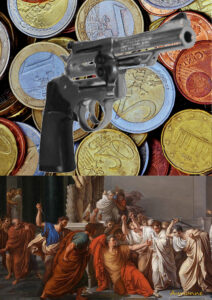
Diogenes was the son of a money changer. The job of a money changer involved supervising exchanges between local and foreign currencies. He earned a good living doing so. Nevertheless, he was accused of counterfeiting currency and was thrown into prison. Diogenes was forced to flee to Athens. At that point, Diogenes experienced uprooting and destitution. Toward the end of the 340s B.C., Diogenes was enslaved and later freed.
Diogenes’s only income stemmed from gifts received from friends, patrons, or listeners. His goal was simply to become as free and self-sufficient (αὐτάρκης / autárkēs) as possible by freeing himself from the superfluous and further limiting his dependence on material possessions. Diogenes’s main activity appears to have been the ethical harassment of his contemporaries, carried out in public squares and other crowded places. “He mocked nobility, glory, and all similar distinctions, which he called the trappings of vice” (Politeia by Zeno of Kition). He condemned the taste for luxury. He sought to live close to nature and, as he said, lived like a dog. His simple, unpretentious way of life was also a way of respecting nature and all living beings.
Diogenes adopted an extremely simple lifestyle, content with only what he considered necessary for survival. Contrary to the image of an ascetic who deliberately deprives himself of everything, Diogenes had a more pragmatic view of poverty. For Diogenes, poverty was not an end in itself, but rather a means to achieve a form of freedom and autonomy. By ridding himself of material possessions, he believed he could free himself from external influences, social pressures, and the trappings that clouded his mind. Diogenes saw wealth and material goods as genuine burdens, as they created a dependence on others and fostered pride and greed. Diogenes did not necessarily reject all possessions, but rather those he considered useless or symbolic. For him, true happiness does not lie in material possessions but in virtue and wisdom.
Diogène de Sinope, le chien royal (- 413 à – 327 av. J.C.) – France Culture: https://www.radiofrance.fr/franceculture/podcasts/une-vie-une-oeuvre/diogene-de-sinope-le-chien-royal-413-a-327-av-jc-4671115
Diogenes – Wikipedia: https://en.wikipedia.org/wiki/Diogenes
Unlike Diogenes, who was an atheist, Francis of Assisi saw in nature a manifestation of God.
Francis of Assisi was the son of a wealthy cloth merchant in Umbria. His father was not a cloth manufacturer but a dealer, sourcing his fabrics from areas where they were produced or traded. His wealth consisted of cash — either invested or lent at interest — and income from lands located in the contado area and, above all, from houses in the city of Assisi itself. After returning from his trip to France, where he had made very good deals, and as a tribute to that country, his father gave him the name Francesco (François in Italian). But Francis did not share his father’s enthusiasm. He saw that the fabrics were dyed with substances harmful to nature. Later, he would advocate wearing a simple, undyed linen robe fastened with a cord rather than a leather belt.
He left school at age 14 and worked alongside his father. He was considered a skilled negotiator. His profession brought him into contact with the nobility of his town, and his large expenses show that he sought to adopt their lifestyle. He then wanted to become a knight. The defeat of the Assisians at Ponte San Giovanni in November 1202 was followed by a year of imprisonment for him. Having fallen ill during his captivity, his father paid for his release. However, his health remained fragile. He turned to religion.
The long illness that confined Francis for much of the year 1204 may have facilitated his gradual shift from chivalric values to a way of life based on the Gospel. Two of the essential virtues dictated by chivalry were practiced by Francis both before and after his conversion: lavish generosity (generosity towards the poor, lepers, and priests) and joy. Francis is deeply influenced by the notion of mercy that he had received from the secular religious movements of his time — a new sensitivity to the suffering and destitution of others.
Furious at his son’s eccentricities, Pietro Bernardone demanded that he answer for his actions and did not hesitate to take him to court to disinherit him.
Following this trial before the bishop of Assisi, Francis broke his relationship with his father. Francis returned the money he had left, as well as, symbolically, his clothes. He then placed himself under the protection of Bishop Guido, who wrapped him in his cloak to signify that the Church was taking him under its jurisdiction and henceforth recognized him as a religious person, in the legal sense of the term. By thus withdrawing from the world, Francis broke not only with his family but also with the commune of Assisi, which guaranteed the rights of its inhabitants.
For him, nature was God’s creation. He found contentment in meeting his basic needs – food and shelter – as provided by God, without seeking luxury or material possessions. By disconnecting from material possessions, he freed his heart and mind, making them more receptive to divine love.
Francis’s poverty is fueled by a deep empathy for those in need. He put himself in their shoes, shared their suffering, and actively sought to help them, whether they were the most destitute or the sick. This compassion drove him to live a selfless life focused on serving others. Love, mercy, and generosity motivated him rather than material wealth and power. Francis of Assisi’s poverty was not a passive state, but an active choice that transformed his understanding of the world and how he lived.
For him, poverty, ecology, and peace are interconnected. He called on people to love all creatures and believed that humans are not superior to them. He rejected machines.
800 ans de Saint François d’Assise : en quoi reste-t-il révolutionnaire ?– France Culture: https://www.radiofrance.fr/franceculture/podcasts/questions-du-soir-l-idee/800-ans-de-saint-francois-d-assises-en-quoi-reste-t-il-revolutionnaire-9172546
Francis of Assisi – Wikipedia: https://en.wikipedia.org/wiki/Francis_of_Assisi
Diogenes of Sinope and Francis of Assisi lived in an era when those in power traded favors for influence. To obtain favors, social status or material possessions, one had to flatter them and do as they wished. By freeing themselves from material possessions, Diogenes of Sinope and Francis of Assisi freed themselves from having to serve these powerful figures and thus gained greater freedom.
They developed their ideas to help their contemporaries. The Athenians who lived during Diogenes’s time suffered under the barbaric rule of the Macedonians, who placed no value on Greek science and civilization. Some Athenians even threw themselves into the sea. The Macedonians ruled as feudal lords: power was concentrated in the hands of a single decision-maker, and there were no laws. Similarly, those Italians living contemporaneously with Francis suffered due to the accumulation of wealth by a few merchants who left others destitute. Both thinkers helped those who needed to live without the superfluous to cope better by reminding them that it was essential to focus on what was truly important and not to be distracted in order to preserve their freedom, civilization, values, and joy. They emphasized that what was lost was not so important.
In William Shakespeare’s play King Lear, when King Lear loses his comforts and royal status and finds himself destitute in the wilderness, he comes to understand the importance of the true love of his daughter Cordelia and shows compassion by putting himself in his subjects’ shoes. He realizes just how much he has been deceived by flattery.
The cases of Diogenes of Sinope and Francis of Assisi and King Lear (even though the latter is fictional) are extreme, but we can learn lessons from them.
The return of Donald Trump to power has placed a 250-year-old democracy in a situation where citizens no longer have a say and where the president alone makes the decisions. Laws are regularly flouted. To obtain what was once taken for granted, one must please the president. As a result of the war in Iran, besides those killed or injured and the destructions caused, the prices of fuel have skyrocketed, forcing the global population to face rising prices without a corresponding increase in income. Furthermore, Trump’s use of customs duties as a form of blackmail is destroying countless jobs around the world.
Recently, in Western countries, the average standard of living has declined: less traveling, fewer leisure activities, less electronic devices, less household appliances, and so on. These are non-essential items, but many people are finding this decline in quality of life difficult to cope with.
Buying non-essential items reduces the budget for essential things: food, security, housing, and health.
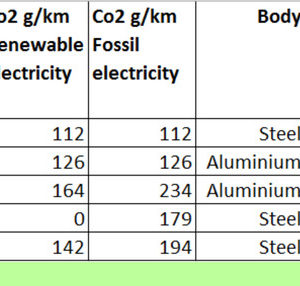
For example, a car serves the purpose of getting us from place to place, regardless of how luxurious it is. However, its reliability, the choice of materials, and its fuel consumption are factors to consider, as they have an impact on the environment. Of course, its safety is also very important.
A new item or a used one — especially if it has been used very little — provide the same service. Buying second-hand helps reduce the production of new goods, which is a major source of pollution.
Avoiding buying unnecessary gadgets and focusing on what is truly useful is also an effective way to combat pollution caused by the overconsumption of new goods. Furthermore, having fewer possessions makes organizing and cleaning easier and frees up space.
Today, those in power are still the ones who live in opulence and cause the most damage to nature.
Translated with DeepL and Ollama TranslateGemma