Le systémisme – France Inter: https://www.radiofrance.fr/franceinter/podcasts/en-quete-de-politique/en-quete-de-politque-du-dimanche-11-mai-2025-7099785
To protect the environment, we need to emit less CO2 and pollute less.
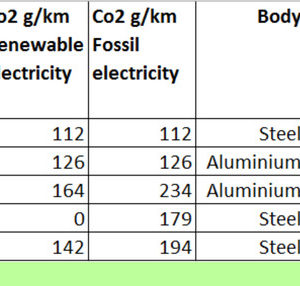
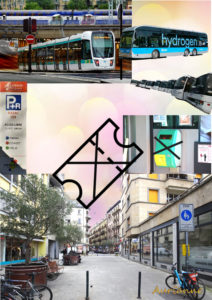
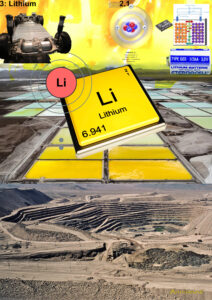
Governments are proposing to subsidize the purchase of electric vehicles. This is a half-measure. What about truck traffic, container ships, and the consequences of lithium and steel mining? To really tackle the issue of transport-related pollution, we need to equip heavy transport with hydrogen energy and therefore plan hydrogen supplies, encourage teleworking and useful work to limit the need for journeys, develop substantial and free public transport and as well as improve traffic conditions for two-wheeled vehicles, and redistribute housing to avoid it being concentrated in cities.
If one measure is taken without the others, the effect is minimal and only serves to complicate people’s lives. This undermines the credibility of those who want to change society without burning everything down.
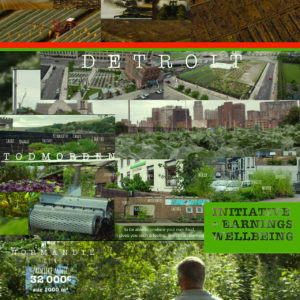
For example, governments subsidize industrial agriculture. Small-scale organic farming should be encouraged. Industrial organic farming only weakens crops and ruins farmers. To promote organic permaculture, we should stop subsidizing intensive agriculture, allow farmers to legally hire workers under good conditions, refuse to import products that do not meet environmental and social standards to avoid unfair competition, lower rents so that people can afford quality food, and control prices to prevent speculation.
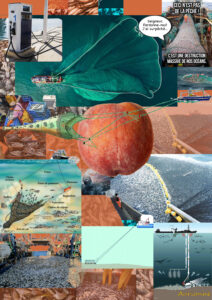
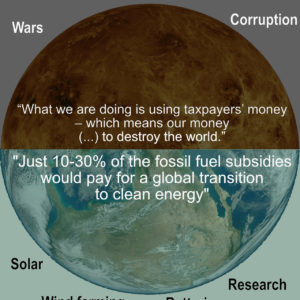
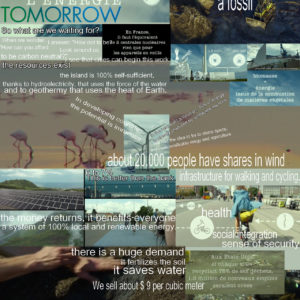
Governments subsidize oil companies and industrial fishermen, who are the biggest polluters. They are even willing to go to war to secure oil. These subsidies must be stopped and these people must be offered other opportunities, such as public services. Agriculture and fishing cause pollution because they are industrialized. They are industrialized because prices are so low that mechanization, large-scale destruction of nature, and the use of chemicals are necessary. If prices were controlled, we could pay people more and therefore exploit natural resources in a much more respectful way. Ultimately, this would lead to more jobs in the primary sector. We must promote green energy sources such as wind turbines and solar panels.
There is no place on this planet that is free of plastic. We cannot solve the plastic problem by cleaning up a beach for a day or simply banning disposable cutlery. The problem is global, and forecasts predict that even more plastic will be produced. We need to tackle oil companies and promote alternatives to plastic: bamboo, corn starch, wood, leaves, etc.
3 surprising ways microplastics can enter your body – TED-Ed: https://youtu.be/lQRsqMiBTsI?si=JXvIm9YjD-xVSncI
Votre cuisine est pleine de microplastiques. Voici comment en manger moins – BBC News Afrique: https://www.bbc.com/afrique/articles/cy9nryxxw18o
Pour un avenir sans plastique – Greenpeace: https://www.greenpeace.ch/fr/agir/pour-avenir-sans-plastique/
Le traité international sur les plastiques en négociation à Genève – Greenpeace: https://www.greenpeace.ch/fr/story-fr/124061/negotiations-traite-plastiques-geneve/
Des microplastiques dans des aliments pour bébés – Greenpeace: https://www.greenpeace.ch/fr/story-fr/132438/microplastiques-aliments-bebes/?utm_campaign=konsum&utm_medium=email&_hsenc=p2ANqtz–ey5L7KVip_jTLB8lWyvWFif2J0YS_T5NxRGjSrKSPXYR0608TdgMTnfyfuu6TNiIt5rSuBk_uBr5micqw0wpWbi7wgA&_hsmi=136318404&utm_source=newsletter
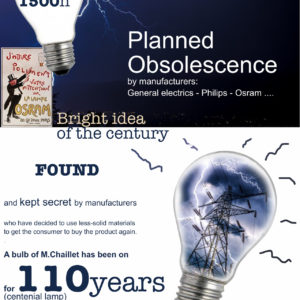
We also need to stop buying unnecessary things. The primary source of pollution is the production of objects. Humans are the only species that produce waste. We need a circular economy, not a “take from nature, make, throw away” system.
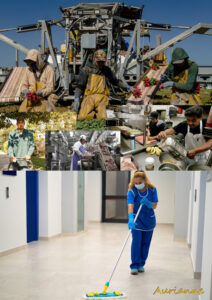
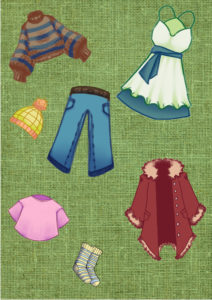
Clothing production conditions are polluting. Producers do not have to worry about social and environmental criteria: they do not treat wastewater, use pesticides, treat employees like slaves, or employ children. We should promote the manufacture of clothing made from hemp, a highly resistant material, bamboo, wool, or linen, which require much less water and produce less carbon. Materials derived from petroleum should also be avoided. It is better to turn to second-hand clothing.
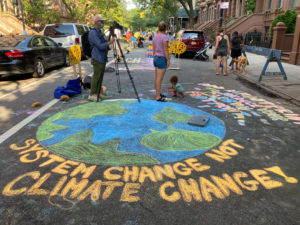
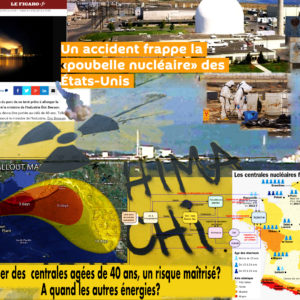
Climate change requires us to move away from greenhouse gas-emitting energy sources. Nuclear power is not a solution for the future. It does not address any of the issues: energy independence, plant safety, waste management, or financial costs. We must therefore phase it out and promote environmentally sustainable energy sources.
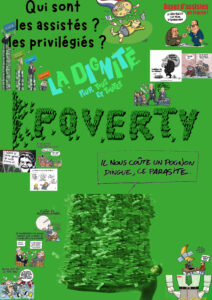
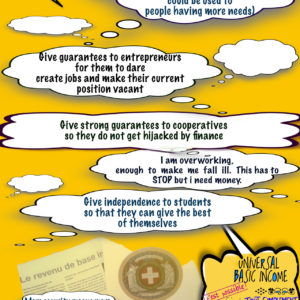
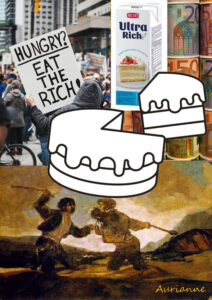
Universal basic income is only possible if prices are controlled, otherwise prices will rise and people will not be able to live in dignity. Other social benefits must be eliminated and the ultra-rich taxed, otherwise we will not have the means to finance universal basic income. To limit wealth, coordinated action is needed at the global level to prevent the ultra-rich from moving to other countries.
Quelles sont les dix plus grandes fortunes de France ? – Observatoire des inégalités: https://www.inegalites.fr/Quelles-sont-les-dix-plus-grandes-fortunes-de-France
2016-2022 : une envolée des revenus des ultra-riches – Observatoire des inégalités: https://www.inegalites.fr/2016-2022-une-envolee-des-revenus-des-ultra-riches
World’s richest 26 people hold same wealth as poorest 50% – Irish Times: https://www.irishtimes.com/news/world/world-s-richest-26-people-hold-same-wealth-as-poorest-50-1.3765091
“Today, the top 10% of the global population’s income-earners earn more than the remaining 90%, while the poorest half of the global population captures less than 10% of the total global income”
“The wealthiest 0.001% alone, fewer than 60,000 multi-millionaires, control today three times more wealth than half of humanity combined.” Highlights from the World Inequality Report 2026 (WIR 2026) – World inequality report: https://wir2026.wid.world/insight/executive-summary/
Just 0.001% hold three times the wealth of poorest half of humanity, report finds – The Guardian: https://www.theguardian.com/inequality/2025/dec/10/just-0001-hold-three-times-the-wealth-of-poorest-half-of-humanity-report-finds
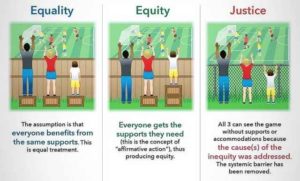
The reforms to the baccalaureate introduced by successive governments have changed nothing. The education system needs to be completely overhauled if it is to achieve the objectives of equal opportunities and training for future citizens.
The recruitment system, which favors those who can afford to pay for their education and those with connections, also needs to be changed, and skills tests introduced. This will only be possible if all citizens have access to education.
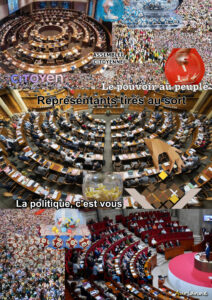
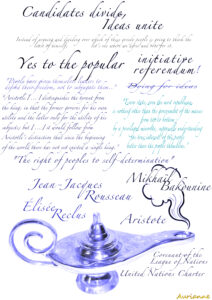
If we want to empower citizens through referendums and the random selection of its representatives, this can only be achieved if they have received a good education and know how to protect themselves against fake news. This also requires an independent and trustworthy press. Furthermore, the means must be in place to enforce the decisions made in this way (independent prosecutors, police, military, labor inspectors, etc.).
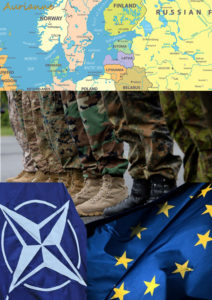
To rearm Europe in a way that acts as a deterrent, we need to rebuild arms factories, secure supplies of raw materials (which means reopening mines), train workers and offer them decent wages, recruit soldiers, and keep them ready for combat. Citizens must pay for an army in times of peace. European law must be consistent. To achieve this, action must be sustained over ten to fifteen years and guarantees must be provided.
Creating new training programs or setting up industries is a long-term endeavor. It is important to ensure that these efforts will not be rendered obsolete by the next election. For example, in order to train for environmentally friendly agricultural jobs, people need to be sure that they will earn a decent income. For example, to build a dam, long-term public aid and staff training are needed. If the next government withdraws subsidies, the dam will go bankrupt. Ukraine is counting on US aid, but Trump’s election has caused it to lose this valuable ally. An electoral system is therefore needed that allows long-term decisions to be taken, for example through referendums and the random selection of representatives.
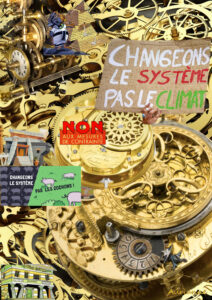
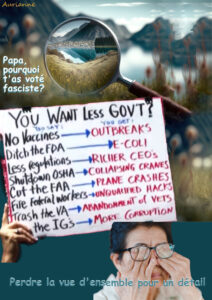
Half measures undermine the credibility of actions because they do not deliver the expected results. Coordinated, long-term action is needed.
Russia and China are capable of maintaining their actions over 25 years. China is complying with the Paris Agreement because it has decarbonized its industry. China has brought prosperity to its people. Autocrats and technocratic governments are appealing because they can bring long-term order. This comes at the expense of human rights.
How can long-term action be maintained in democracies that change their opinions as a result of regular elections?
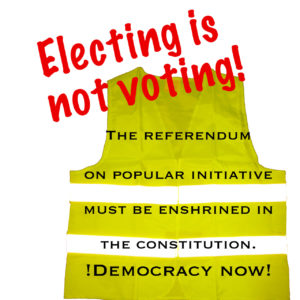
Electing people for short terms is not voting. We need to vote for ideas and vote for the long term. Democracies need to be stabilized in order to face major challenges.
Translated with Deepl