I’ve heard a lot of good ideas about fair trade and organic farming, but I have a few thoughts and reactions.
First of all, I think it’s excessive to imagine a substantial change based on consumers paying more. In most European countries, our producers are paid a pittance by the middlemen because they are able to live off subsidies, in other words public money that comes from the pockets of consumers, who also pay for the high health costs of industrial food, pollution and unemployment. In the final analysis, the consumer has already paid, via taxes, 3/4 of the cheap product on the shelf before even buying it. Under these conditions, it’s hard to ask them to choose the more expensive ‘fair trade’ or organic product next door, which is not subsidised. Furthermore, for imported products, it is often difficult to verify that the conditions for obtaining organic or fair trade certification have been met.
Now for something more general:
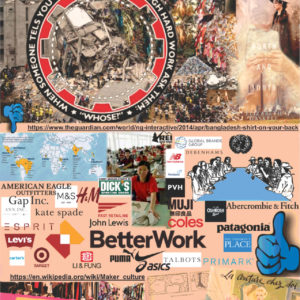
My point of view is that the neo-liberal revolution of the late 70s came with an ideological corpus understanding that the State should regulate as little as possible but subsidise more. One cheque for petrol, another for food, subsidies to producers and consumers alike to keep prices down. This abandonment of the role of the protective State means that industrialists do not have to suffer the consequences (poverty, health, unemployment) of their model. The same principle applies in “low-cost” countries. In fact, it’s not out of love for Bangladesh that a brand produces there, but because this state, like others, does not play its role in protecting its population (not polluting, not making its children work, not destroying its natural resources, and so on).
This ideology has also been the compass of organisations such as the WTO (World Trade Organisation), which has opened up international trade on the basis that simply trading and mutual enrichment will produce development for all. As a result, even if we were to ‘protect’ better in Europe, it would be fair to our producers to stop importing from countries that are not committed to protecting their own people and environment.
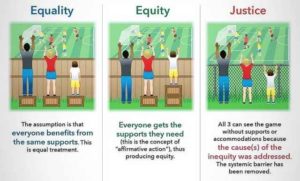
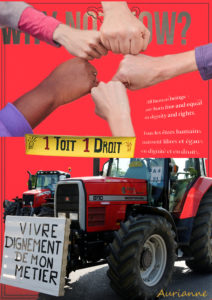
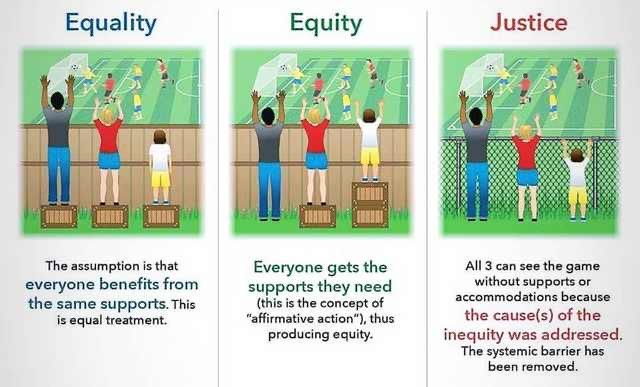
I think this thinking goes beyond consumer goods. For example, the welfare state is going to provide assistance to a disabled person to get over a hurdle, instead of first asking why not remove the obstacle and allow the person to live with dignity. Of course, there will always be a need for the community to help its most vulnerable members, but today this argument is exploited for the benefit of middlemen.
Environmentally-friendly criteria should be imposed for both domestic and imported products, because they are less costly for the public and guarantee respect for the soil, which is necessary for the long-term survival of the farm and for climate regulation. Industrial farming impoverishes the soil and eventually renders it infertile and without the water that regulates temperature.
Farmers no longer have the freedom to cultivate their fields as they see fit, as they sell to purchasing centers that impose low prices and industrial farming techniques on them. Since the law of March 24, 2025 (Law No. 2025-268 of March 24, 2025 on food sovereignty and generational renewal in agriculture – Légi France: https://www.legifrance.gouv.fr/jorf/id/JORFTEXT000051368091 ), farmers can sell directly to consumers, but only up to a limit of €20,000 per year or a maximum of 40% of their production. This is very little; the average production per farm is €91,000 per year. This means that the law still restricts farmers’ freedom to dispose of an average of three-quarters of their harvest as they see fit. Why?
Activités commerciales pour les sociétés civiles agricoles – Chambre d’agriculture Vosges: https://vosges.chambres-agriculture.fr/sinformer/reglementation/detail-reglementation/activites-commerciales-pour-les-societes-civiles-agricoles#:~:text=Des%20limites%20pour%20%C3%A9viter%20les,dans%20la%20limite%20de%2010.
Farmers have also lost their freedom due to excessive regulations. Furthermore, governments only subsidize industrial agriculture instead of subsidizing responsible farming practices. Organic or conventional industrial farming only weakens crops and ruins farmers.
These regulations are only justified when they limit pollution and animal suffering. Farmers must be trained in sustainable and environmentally friendly farming techniques with small, diversified, and circular (no waste) farms. Farmers and workers must be paid decently and treated as responsible professionals. They must be granted loans without conditions on how they work. Only then will they be able to do good work while respecting nature and animals.
When Albert Howard formalized what modern organic farming should be, he wanted plants and animals to be more resilient. The farm he describes is a regenerative farm with minimal inputs and minimal waste. Agriculture is circular. Animals and plants share the same space. Animals enrich the soil. Pests are a source of information to be used. We must not go against nature. The varieties of animals and plants are specific to the farm and different from the farm next door. Animals and plants do not conform to standards. There can be no mass production of a single variety.
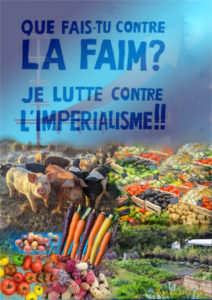
Regenerative organic farming is much more labor-intensive and cannot provide uniform products all year round. Regenerative farms do not have access to supermarket purchasing centers. We must encourage the creation of cooperatives and direct sales, without intermediaries.
Small farms without tractors have no loans, which means they have far fewer constraints. They should be able to receive subsidies without being forced to become industrial to avoid unfair competition. We also need to prevent governments from introducing absurd regulations that protect industrial agriculture.
Microfermes, des exploitations très rentables | Reportage (2023) | ARTE Regards: https://youtu.be/YICPZ27377o?si=PSVBA8lVZvVg-ubQ
Dans leur miniferme, ces éleveurs bretons vivent en quasi-autonomie – Reporterre: https://reporterre.net/Dans-leur-miniferme-ces-eleveurs-bretons-vivent-en-quasi-autonomie
Rents should also be lowered so that people can afford quality food, and prices should be controlled to prevent speculation.
Translated with DeepL.com (free version)